
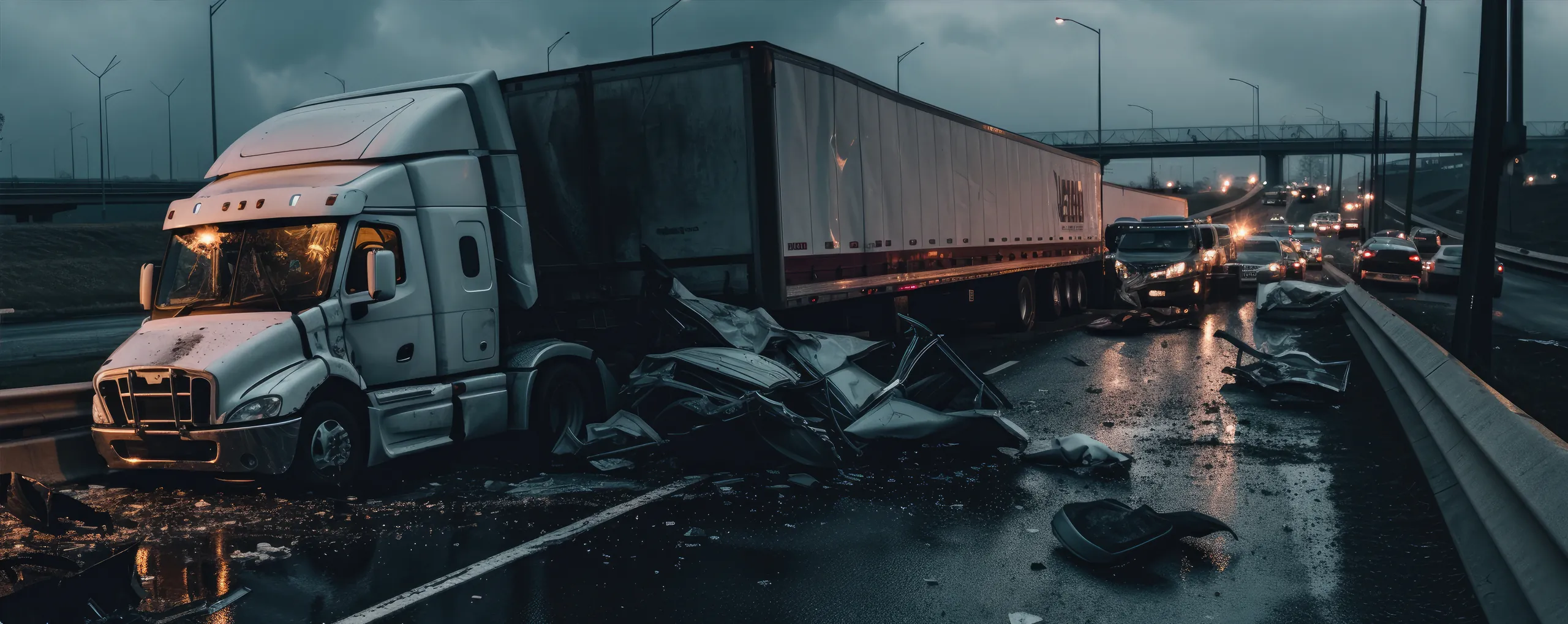
Truck underride accidents are among the most fatal traffic collisions, often leading to devastating consequences for those in passenger vehicles. These crashes happen when a car slides underneath a much larger truck or trailer, resulting in severe injury or death. This article outlines the mechanics, causes, medical impacts, legal rights, and preventive measures surrounding underride accidents.
Need Help With Truck Accidents?GET A FREE CONSULTATION.
215-774-5162
What Exactly Is an Underride Accident?
An underride accident occurs when a passenger vehicle becomes lodged underneath a larger commercial truck or trailer during a crash. The smaller vehicle usually sustains heavy structural damage, especially to the roof and upper cabin areas, which poses extreme risk to the occupants.
Key Characteristics
The defining factor of an underride crash is the size and height disparity between the two vehicles involved. Unlike typical collisions, where crumple zones and bumpers absorb energy, underride crashes bypass these safety features, leading to catastrophic consequences.
Types of Underride Collisions
Rear Underride Collisions
These accidents typically occur when a passenger car crashes into the back of a truck that is stopped or moving slowly. Rear underride guards are meant to prevent the car from sliding underneath, but if they fail—or are absent—the results can be fatal.
Side Underride Collisions
Side underride incidents occur when a vehicle collides with the side of a turning or crossing truck. These are particularly deadly because side guards are not federally mandated in the U.S., and the area between the truck wheels offers no structural protection to stop a vehicle from going underneath.
What Makes Underride Accidents So Dangerous?
Structural Design Limitations
The design of commercial trucks inherently lacks compatibility with smaller vehicles. The elevated undercarriage of a truck allows even a moderate-speed collision to cause a passenger vehicle to slide under it, exposing the cabin to direct impact with the trailer body.
Safety Feature Shortcomings
Traditional safety technologies like airbags, seatbelts, and crumple zones do little in underride scenarios. These systems were not designed to protect occupants in cases where the entire roof and upper body of the car is compromised.
What Causes Underride Accidents?
1. Equipment Failures
One of the leading causes is the failure of underride guards. Whether it’s due to poor design, outdated manufacturing standards, or inadequate maintenance, a faulty guard can turn a survivable crash into a fatal one.
2. Human Factors
Driver errors such as tailgating, speeding, fatigue, and distraction significantly increase the likelihood of underride crashes. These incidents are also more common at night when visibility is reduced and truck lighting may be insufficient.
3. Environmental Conditions
Poor road conditions, inclement weather, and inadequate signage can also contribute. If a truck is not well-lit or marked, it becomes a near-invisible obstacle for approaching vehicles in low visibility settings.
Injuries Commonly Sustained in Underride Collisions
1. Head and Brain Trauma
Due to direct intrusion into the passenger compartment, head injuries are nearly inevitable. Victims may suffer from skull fractures, brain swelling, concussions, or even decapitation in extreme cases.
2. Spinal and Internal Damage
The force of the crash can compress the spine, cause nerve damage, or shatter vertebrae. Internal bleeding and punctured organs are also frequent outcomes due to the high-impact nature of the crash.
3. Psychological and Long-Term Effects
Survivors often deal with lasting consequences, including chronic pain, mobility issues, and psychological trauma such as PTSD, anxiety, and depression.
The Role of Underride Guards
Rear Guards: What Are They?
Rear underride guards, commonly known as “Mansfield bars,” are metal barriers installed beneath the back end of trailers. Their purpose is to prevent smaller vehicles from sliding underneath in a rear-end crash.
Side Guards: Still Rare in the U.S.
Unlike in some European countries, side guards are not mandatory in the U.S. These barriers can prevent side underride accidents but are largely absent from American trucks.
Guard Failures and Lawsuits
When guards fail to perform as intended, either due to design flaws or poor maintenance, victims or their families may pursue legal action against the manufacturer or trucking company.
What Are the Legal Responsibilities of Trucking Companies?
Federal Regulations and DOT Compliance
The Department of Transportation requires trucks to have rear underride guards, but the standards have not been meaningfully updated in decades. There is currently no federal requirement for side underride protection.
Negligence and Liability
Trucking companies are responsible for ensuring their vehicles meet safety regulations. Failure to do so can be grounds for negligence in a legal claim, especially if it leads to severe injury or death.
Questions About Truck Accidents?GET A FREE CONSULTATION.
215-774-5162
What Legal Options Do Victims Have?
Grounds for Legal Action
If an underride crash occurs due to the negligence of a truck driver, failure to maintain safety equipment, or a defective guard, victims may be entitled to compensation. This can include damages for medical bills, lost income, and emotional suffering.
Who Can Be Sued?
Potential defendants in an underride case may include the truck driver, the trucking company, the manufacturer of a defective guard, and any party responsible for vehicle maintenance.
Importance of Timely Action
Legal claims are governed by statutes of limitation, meaning there’s a limited time to file a lawsuit. Consulting a lawyer quickly ensures that evidence is preserved and deadlines are met.
Can These Accidents Be Prevented?
Engineering and Safety Solutions
Better-designed underride guards, automatic emergency braking systems, and stronger regulatory standards could drastically reduce the frequency and severity of underride crashes.
Public Advocacy and Legislation
Several safety groups are calling for stricter laws, including mandatory side guards and updated rear guard standards. Raising public awareness and applying political pressure are key to achieving these reforms.
What Should You Do After an Underride Crash?
1. Immediate Medical Evaluation
Even if injuries are not visible, it’s essential to seek immediate medical care. Some life-threatening conditions may not be immediately apparent but can worsen without prompt treatment.
2. Preserve Evidence
Take photos, gather contact information from witnesses, and secure a copy of the police report. These will be critical if you decide to pursue a legal case.
3. Contact a Personal Injury Attorney
An experienced attorney can help you determine liability, deal with insurance companies, and file a lawsuit if necessary. Legal representation greatly increases your chances of obtaining fair compensation.
NOTABLE RESULTS
Fulginiti Law’s trucking results include:
$12,000,000 settlement · $9,000,000 settlement · $5,000,000 settlement
Read more about these results
- $12,000,000 settlement: Rear-end truck collision in Virginia; the case was maintained in Philadelphia. Case result source
- $9,000,000 settlement: Fatal truck collision involving evidence of driver fatigue. Case result source
- $5,000,000 settlement: Fatal collision involving debris falling from a passing truck on the Turnpike. Case result source
Prior results do not guarantee a similar outcome. Each case is different and must be evaluated on its own facts.
WHAT OUR CLIENTS SAY
General feedback about working with Fulginiti Law:
He was always available if I had any questions, whether those questions were big, small, and sometimes irrelevant.
— Maria Mangano
One thing that stood out to me about Ken, he was very personable but extremely professional. They’ve never made us feel like clients; they’ve always made us feel like family.
— Jace and Nancy
Professional Recognition
Published Writings by Ken Fulginiti
- The One Piece of Evidence Nobody Appreciated — Ken Fulginiti, The Legal Intelligencer, June 25, 2026.
- Data Doesn’t Lie: What Trucking Crash Evidence Really Shows About Fault — Ken Fulginiti, The Legal Intelligencer (Law.com), July 21, 2026.
Frequently Asked Questions About Truck Underride Accidents
What is the difference between a rear and side underride accident?
A rear underride accident happens when a passenger vehicle crashes into the back of a truck and slides underneath the trailer. These incidents often occur during traffic congestion or when a truck suddenly stops. A side underride accident, on the other hand, occurs when a vehicle hits the side of a truck, often during a wide turn or while the truck is crossing an intersection. Both types are extremely dangerous and can result in severe injuries or fatalities due to the intrusion of the truck structure into the passenger cabin.
Are underride guards required on all commercial trucks?
Rear underride guards are mandated by the U.S. Department of Transportation for most commercial trucks. However, the standards are considered outdated and may not withstand the forces generated in modern collisions. Side underride guards are not federally required in the United States, although they are standard in some other countries. This lack of regulation leaves many vehicles vulnerable during side-impact collisions with large trucks.
Can I sue if I or a loved one was injured in an underride crash?
Yes, you can sue if the accident involved negligence, such as faulty underride guards, poor truck maintenance, or violations of traffic and safety regulations. Victims or their families may have grounds to file a personal injury or wrongful death lawsuit. Depending on the circumstances, the truck driver, trucking company, or the manufacturer of a defective underride guard may be held liable.
What kind of injuries are typical in underride accidents?
Underride accidents often result in catastrophic injuries due to the intrusion of the truck’s structure into the passenger cabin. Victims may suffer from head trauma, traumatic brain injuries, spinal cord damage, internal organ injuries, and in the worst cases, decapitation. Survivors frequently require long-term medical care and rehabilitation, and the emotional impact can be severe.
Why are underride crashes so deadly compared to other types of collisions?
Underride crashes are uniquely dangerous because the collision occurs above the level where most car safety features are effective. Airbags and crumple zones are designed to protect occupants from horizontal impacts, not vertical intrusions from above. When a car slides under a trailer, the upper part of the passenger compartment is often sheared off, putting the head and upper body of occupants directly in harm’s way.
Contact Fulginiti Law Today
Underride accidents are not just rare occurrences—they’re preventable tragedies that claim lives and devastate families every year. Despite known risks and viable solutions, regulatory and industry inertia continues to leave motorists vulnerable. If you or a loved one has been affected by an underride crash, time is critical. Contact Fulginiti Law for a free consultation to explore your legal rights and seek justice. The sooner you act, the stronger your case may be.
Related Practice Resources
Related Articles
- How Employer Negligence Leads to Catastrophic Truck Accidents
- Why Truck Accidents Lead to More Severe Injuries Than Car Accidents
Ready to Discuss Your Truck Accidents Case?GET A FREE CONSULTATION.
215-774-5162


Related Fulginiti Law Videos and Social Posts