After doing much research and talking with many other attorneys, we came across Ken and Sarah and we never looked back! We genuinely feel we found the very best firm to help us in such tragic time of need!
— Jace · Read Jace’s full review on Google
 Fulginiti Law

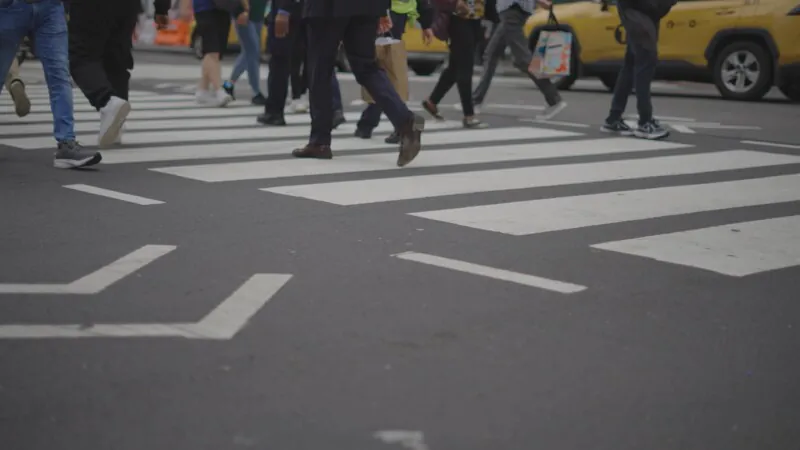
A pedestrian collision can cause serious injury even at a low speed. Understanding responsibility requires more than identifying who was on foot and who was driving. Fulginiti Law investigates pedestrian injuries in Philadelphia PA by examining traffic signals, crossing locations, sight lines, vehicle movements, and the evidence available from the scene.

Get medical help and move out of immediate danger if you can do so safely. For a serious collision, call 911. Once emergency needs are addressed, save the police incident number, driver and vehicle details, witness contacts and any photographs already taken. Do not return to an active roadway to collect evidence.
A pedestrian claim often turns on seconds: where the person entered, which signal was displayed, whether a vehicle was turning and what the driver could see. Record your actual recollection while it is fresh. Say when something is uncertain rather than adopting an account supplied by an insurer or another witness.
Pennsylvania’s crosswalk statute requires yielding in specified circumstances but also prohibits stepping suddenly into a vehicle’s hazardous path. The relevant facts must be assessed together. A crossing location or an accusation of fault should not replace an investigation.
Source: 75 Pa.C.S. §3542: Pedestrian right-of-way in crosswalks.
Pennsylvania law requires drivers to yield to pedestrians in specified crosswalk circumstances when signals are absent or not operating, while also addressing a pedestrian’s sudden entry into a vehicle’s path. A marked crossing does not eliminate the need to examine timing and conduct.
Signal-controlled intersections, midblock crossings, turning vehicles, and parking-lot incidents may present different issues. The investigation should document the location and traffic controls rather than assume a single rule covers every collision.
Photographs can document crossing markings, lighting, sight obstructions, vehicle damage, and the direction of travel. Witness accounts and nearby surveillance may help resolve disputed speeds or signals. Save clothing and personal items if they may be relevant, without disturbing medical care.
An attorney can seek preservation of footage, vehicle data, and other records. A police report is useful, but it may not include every witness or establish the full collision sequence.
Medical-payment benefits and a claim against an at-fault party require a policy-specific review. The available route may depend on the injured person’s coverage, the involved vehicle, and other facts. A rideshare, commercial, or public vehicle adds further coverage questions.
Do not accept a denial simply because the pedestrian was not occupying a car. Likewise, do not assume a particular benefit or limit applies without reviewing the policy and Pennsylvania law.
Treatment records, restrictions, wage documentation, rehabilitation needs, and a supported prognosis help evaluate the losses. A serious injury can affect commuting, work, household tasks, and independence well beyond the initial hospital stay.
Pennsylvania comparative-negligence rules may affect recovery in an ordinary negligence claim. The general two-year personal-injury filing period is not a reason to wait: public-entity issues, insurance deadlines, and disappearing footage may require earlier action.
A Philadelphia intersection may have marked crossings, turning traffic, parked vehicles and different signals controlling pedestrians and drivers. Identify the actual crossing rather than assuming that every collision near an intersection occurred within a marked crosswalk. Preserve photographs that show the complete approach and obstructions, not only the point of impact.
Investigators may compare video, witness accounts, vehicle damage and electronic evidence to understand speed, visibility and timing. A police report can identify participants and observations, but it may not resolve every disputed fact. If a witness did not see the beginning of the event, that limitation matters.
| Disputed fact | Potential evidence | Why it matters |
|---|---|---|
| Crossing signal | Video, witness observations, available signal records | Identifies which movements were permitted at the relevant time |
| Turning vehicle | Approach video, vehicle position, sight-line photographs | Helps explain the driver’s opportunity to observe the crossing |
| Obstructed view | Parked vehicle positions, lighting and scene photographs | Shows what each person could see before impact |
| Crossing outside a crosswalk | Exact location, roadway configuration, witness accounts | Allows the applicable crossing rules to be evaluated |
The crosswalk and outside-crosswalk provisions address different circumstances. Neither should be reduced to a slogan that pedestrians always win or can never recover outside the lines.
Sources: 75 Pa.C.S. §3542: Crosswalk duties; 75 Pa.C.S. §3543: Crossing outside crosswalks.
An insurer may allege that the pedestrian crossed against a signal, entered suddenly or was difficult to see. Preserve the basis for the allegation and the evidence that supports or contradicts it. Do not accept a percentage of fault solely because it appears in a claim letter.
Under Pennsylvania’s comparative-negligence statute, fault can affect recovery, including whether recovery is permitted. Applying the rule requires a legal review of the parties, claims and proven conduct. The investigation should consider both the pedestrian’s movement and the driver’s speed, lookout and response rather than treating one disputed fact as the entire case.
If you cannot remember the collision because of the injury, say so. Other evidence may still be available. A lawyer can identify potential records and arrange preservation without asking you to reconstruct events you did not observe.
Sources: 42 Pa.C.S. §7102: Comparative negligence; Pennsylvania Rule 4003.5: Expert discovery.
Keep the driver’s insurance details and identify any potentially relevant personal or household vehicle policies. Coverage review and fault review answer different questions. A policy may contain conditions, exclusions or notice requirements that need assessment even while the collision facts are disputed.
Bring complete policy documents and denial letters to a consultation. Ask what coverage is being evaluated and why. Opening one claim or receiving one denial does not establish that every possible source of coverage has been addressed. A serious injury should also be evaluated against supported future needs before a release is signed.
Keep the treatment plan and discuss new or changing symptoms with treating clinicians. Maintain a dated record of assistance with walking, transportation, shopping, household work or personal care. An accurate record can show how limitations develop without asking you to diagnose a condition or assign a settlement value.
Work loss requires its own evidence: wages, duties, missed shifts and medical restrictions. For a student, retiree or unpaid caregiver, the absence of wages does not mean there are no meaningful losses. Medical and other expert evidence may help explain ongoing limitations and future care.
Source: Pennsylvania Rule 223.3: Noneconomic injury losses.
The firm’s published case results include an $8,525,000 recovery for a pedestrian struck by a motor vehicle in a case involving contested liability and comparative fault. It illustrates experience with disputed responsibility, while the facts and outcome of a new claim require independent assessment.
Ken Fulginiti’s biography describes catastrophic-injury litigation and technical investigation, including scene analysis and electronic evidence. Those methods can help answer practical questions about visibility, vehicle movements and injury consequences. Ask how evidence will be preserved and who will explain the medical and financial record.
Sources: Fulginiti Law: Published pedestrian case result; Ken Fulginiti: Investigation experience.
Broader personal-injury reading by Ken Fulginiti:
Fulginiti Law — Broader motor-vehicle results:
$19,500,000 verdict · $4,000,000 settlement
Prior results do not guarantee a similar outcome. Each case is different and must be evaluated on its own facts.
Excerpts from client reviews on Google.
After doing much research and talking with many other attorneys, we came across Ken and Sarah and we never looked back! We genuinely feel we found the very best firm to help us in such tragic time of need!
— Jace · Read Jace’s full review on Google
Ken worked tirelessly along with Sarah and staff as they were always available to answer my questions or concerns…
— Bob · Read Bob’s full review on Google
I was very impressed with the attention, care, and professionalism I received from Ken and his team.
— Enid · Read Enid’s full review on Google
These answers provide general information. The applicable rules depend on the facts and type of claim; a case review can address your circumstances.
Pennsylvania law requires yielding in specified crosswalk circumstances when traffic signals are absent or not operating. Riders struck while on a scooter can turn to an electric scooter injury lawyer in Pennsylvania for help with a claim.
The same statute addresses sudden pedestrian entry into a vehicle’s path. Signals, location, timing, and conduct need review; a crosswalk does not establish every element of a claim by itself. Preserve the crossing location, signal status and vehicle approach so the statutory duties can be evaluated in their actual setting. A marked crossing, an unmarked intersection crossing and a signal-controlled crossing present different facts. Include what you personally observed and distinguish it from information provided later. Photographs showing the whole intersection may be more useful than a close-up of impact damage.
Sources: 75 Pa.C.S. §3542: pedestrians in crosswalks; 42 Pa.C.S. §7102: comparative negligence.
Possibly. The location and conduct require individual legal review.
A lack of painted markings does not answer every duty question, and a pedestrian’s conduct can affect recovery. Preserve the exact crossing location and signal information rather than relying on a general rule. Record the exact place where you crossed and whether nearby intersections had signals. The outside-crosswalk rules and the driver’s conduct both require review. Keep available video and witness accounts that show the approach. Do not treat an insurer’s statement about crossing outside the lines as a complete determination of responsibility or the applicable fault allocation.
Sources: 75 Pa.C.S. §3542: pedestrians in crosswalks; 42 Pa.C.S. §7102: comparative negligence.
Witnesses, surveillance, scene photographs, and other reliable records can help reconstruct the crossing.
Obtain preservation advice promptly. The statutory duties depend on the crossing circumstances, and expert investigation may be needed when the parties give conflicting accounts. Identify businesses and properties with cameras before footage may be overwritten. Keep original recordings rather than a short excerpt alone, and note whether the witness saw the signal before impact. A reconstruction may compare the observed movements with available timing and physical evidence. A disputed signal should remain a factual question until the relevant material is reviewed.
Sources: 75 Pa.C.S. §3542: pedestrians in crosswalks; Pa.R.C.P. 4003.5: expert discovery.
No. Liability and available benefits still require review of the involved vehicles, policies, and circumstances.
A rideshare vehicle can add statutory coverage issues distinct from an ordinary private vehicle. Identify the driver and trip status where relevant instead of assuming all pedestrian incidents use the same insurance. Bring any potentially relevant personal or household auto policies, the driver’s insurer details and correspondence about benefits or denials. Coverage questions should be assessed separately from whether the driver acted negligently. Ask which policy and provision each company is relying on. One denial does not establish that every available coverage source has been evaluated.
Sources: 53 Pa.C.S. §57A07: Philadelphia rideshare insurance; 42 Pa.C.S. §7102: comparative negligence.
Not by itself. The allegation must be evaluated against the evidence and applicable law.
Pennsylvania’s pedestrian statute and comparative-negligence rules can matter. Vehicle speed, visibility, timing, and the crossing location should be examined before accepting a fault allocation. Ask what evidence supports the allegation: video, witness observations or a reconstruction rather than speculation. Preserve your recollection and identify any blocked view or turning vehicle. A rule about entering a hazardous path must be applied to the actual sequence. Do not adopt a fault percentage solely because an adjuster puts it in writing.
Sources: 75 Pa.C.S. §3542: pedestrians in crosswalks; 42 Pa.C.S. §7102: comparative negligence.
Many claims have a two-year filing period, but the correct deadline depends on the legal theory and facts.
Exceptions, public-entity notices, insurance requirements, and other rules can matter. Seek a prompt review rather than treating the ordinary limitation period as permission to postpone evidence preservation. Bring the collision date, party names and every insurer letter to an early review. A legal filing period and an evidence-preservation need are separate concerns: video or a vehicle’s original condition may disappear much sooner. Opening an insurance claim is not the same as filing suit, and treatment continuing does not by itself extend every deadline.
Sources: 42 Pa.C.S. §5524: filing periods; Pa.R.C.P. 4003.5: expert discovery.
The analysis depends on the proven conduct and legal theory. An insurer’s initial percentage is not the final answer, and negligence rules should not automatically be extended to every other type of claim. The investigation should consider both the pedestrian’s movement and the driver’s response. Save evidence supporting or contradicting each allegation and ask how the applicable rule affects the parties involved. Different claims may require additional analysis. An insurer’s preliminary percentage is a negotiating position to review, not a substitute for the proven facts and governing law.
Sources: 42 Pa.C.S. §7102: comparative negligence; Pa.R.C.P. 223.3: noneconomic damages.
The evaluation considers documented treatment, wage loss, supported future needs, and recoverable pain or impairment.
The injury and prognosis matter more than an online average. Expert evidence may be needed to explain long-term medical, vocational, or financial consequences. Include work duties, wage statements, restrictions and changes in everyday assistance. A student, retiree or caregiver may have significant limitations even without a wage claim. Medical recommendations should support future treatment needs rather than an unsupported estimate. Keep the assessment current as recovery develops and avoid using another person’s settlement as a valuation formula.
Sources: Pa.R.C.P. 223.3: noneconomic damages; Pa.R.C.P. 4003.5: expert discovery.
No. An early review can address deadlines and preservation even while treatment continues.
A final prognosis may take time, but filing periods do not necessarily wait for full recovery. Save original records and evidence so the loss can be evaluated as the medical picture becomes clearer. You can seek advice about evidence and deadlines while following the treating team’s recommendations. Identify available witnesses and recordings early and retain updates about recovery. Beginning an investigation does not require accepting a settlement before the prognosis is reasonably understood. Tell the lawyer about any approaching response dates in insurer letters or proposed agreements.
Sources: 42 Pa.C.S. §5524: filing periods; Pa.R.C.P. 4003.5: expert discovery.
No. A meaningful assessment should consider the proven injury and supported future consequences, not just the first expense.
Medical prognosis, work restrictions, liability, and recoverable losses require review. Expert evidence may be necessary before a proposed release can be evaluated against the full claim. A proposed release should be reviewed against the medical prognosis, liability evidence, relevant coverage and potential ongoing needs. An early expense may omit rehabilitation, later treatment and lasting limitations. Keep the actual terms of the proposal. Ask what is resolved, which parties are released and what important questions remain before treating the payment as adequate compensation.
Sources: Pa.R.C.P. 223.3: noneconomic damages; Pa.R.C.P. 4003.5: expert discovery.
One Commerce Square
2005 Market Street, Suite 3710
Philadelphia, PA 19103


Related Fulginiti Law Videos and Social Posts