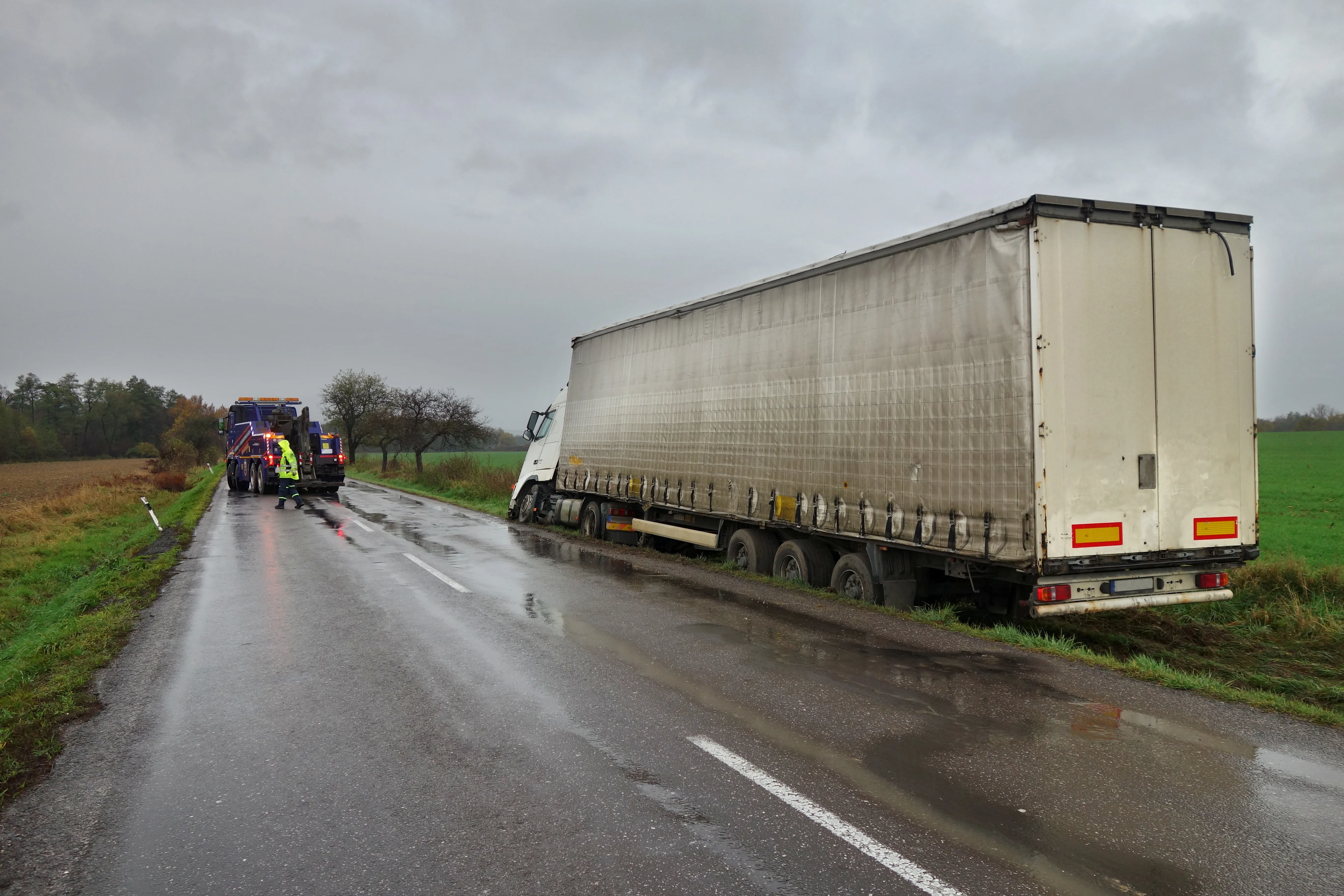
A collision with a tractor-trailer, delivery truck, dump truck, or other commercial vehicle can leave you facing serious injuries, time away from work, and calls from several insurance companies. If you or a family member was injured in Haverford PA or elsewhere in Delaware County, the first priorities are appropriate medical care and protecting your ability to make informed decisions.
Truck accident claims often involve more than the driver. The motor carrier, vehicle owner, maintenance provider, cargo company, or another business may have contributed to the crash. Fulginiti Law represents people with serious injuries in truck and commercial-vehicle accident claims and investigates the companies, insurance policies, and safety decisions involved.
Call now
215-774-5162Why a Truck Accident Claim Can Be Different
A passenger-vehicle crash commonly begins with two drivers and their insurers. A commercial truck case may involve a driver working under dispatch, a tractor owned by one business, a trailer owned by another, and cargo loaded or secured by a separate company.
Commercial vehicles can also generate evidence that ordinary cars may not have, including electronic driving logs, dispatch records, GPS information, engine-control data, inspection reports, maintenance histories, and onboard video. Some of that information may be overwritten or lost unless steps are taken to preserve it.
The purpose of an investigation is not simply to find a regulatory violation. It is to determine what caused the collision, which people or businesses controlled the relevant work, and whether their conduct contributed to the injuries.
How Pennsylvania Truck Accident Claims Generally Work
An injured person generally must show that another party failed to act with reasonable care, that this failure caused the crash, and that the crash caused compensable harm. Depending on the truck, carrier, and route, state traffic laws and federal motor-carrier regulations may both be relevant.
For example, federal rules address maximum driving time for many property-carrying commercial drivers, cargo securement, and vehicle inspection and maintenance. A violation may support an investigation, but it does not automatically establish civil liability. The circumstances of the crash and the connection between the conduct and the injury still matter. (ecfr.gov)
Medical Benefits and Liability Insurance
Pennsylvania auto policies generally include first-party medical benefits for covered people. State law requires at least $5,000 in medical-benefit coverage on most registered passenger-vehicle policies, and higher limits may have been purchased. Which policy applies first can depend on whether the injured person was a driver, passenger, pedestrian, or household member. (legis.state.pa.us)
A separate liability claim may be made against those responsible for the collision. An attorney may also review uninsured or underinsured motorist coverage, umbrella policies, employer policies, and other possible sources of coverage.
Limited Tort and Full Tort
A Pennsylvania limited-tort election can restrict recovery of pain-and-suffering damages unless the injury meets the statutory standard or an exception applies. Full tort generally preserves a broader right to seek noneconomic damages.
Limited tort does not automatically prevent a truck accident claim. The registration of the truck, the type of vehicle occupied by the injured person, the seriousness of the injury, and other statutory exceptions may affect the analysis. The policy and facts should be reviewed before accepting an insurer’s position about available damages. (legis.state.pa.us)
Comparative Negligence
Under Pennsylvania’s comparative-negligence law, an injured person may recover when their share of negligence is not greater than the causal negligence of the defendant or defendants from whom recovery is sought. Any award is reduced by the injured person’s percentage of fault. A person found more than 50% responsible generally cannot recover under this rule. (legis.state.pa.us)
What to Do After a Truck Accident
Your health comes first. Take the following steps when they are safe and appropriate for your circumstances:
- Call 911 and seek medical care. Report pain, confusion, weakness, numbness, dizziness, or other symptoms to emergency personnel. Follow the discharge and follow-up instructions provided by your healthcare professionals.
- Identify the truck and carrier. If you can do so safely, photograph the tractor, trailer, license plate, company name, and USDOT or MC number. The company displayed on the cab may not be the only business involved.
- Document the scene without putting yourself at risk. Photographs of vehicle positions, damage, debris, road conditions, traffic signals, and visible injuries may help. Obtain witness names and contact information when possible.
- Notify your insurer promptly. Provide the information required by your policy, but avoid guessing about speed, distance, injuries, or fault. Consider speaking with a lawyer before giving a recorded statement to the trucking company’s insurer or signing a broad medical authorization or release.
- Keep important records together. Save medical instructions, bills, prescription information, insurance correspondence, towing documents, repair estimates, and records of missed work. A brief symptom and appointment journal can also help you accurately describe how the injury has affected you.
- Ask for legal guidance before evidence disappears. Trucking companies and insurers may begin investigating immediately. A lawyer can send preservation notices and determine whether the truck, electronic data, video, and business records should be inspected or secured.
Common Truck Crash Scenarios and Injuries
Serious commercial-vehicle collisions may involve:
- Rear-end crashes caused by inadequate stopping distance
- Unsafe lane changes or wide turns
- Driver distraction, impairment, or fatigue
- Excessive speed for traffic, road, or weather conditions
- Jackknife and rollover crashes
- Shifting, unsecured, or falling cargo
- Brake, tire, steering, lighting, or other mechanical problems
The force of a truck collision can cause fractures, internal injuries, crush injuries, burns, neck and back damage, traumatic brain injuries, and spinal cord injuries. Some symptoms, particularly those associated with a concussion, may not be obvious immediately. Seek appropriate medical evaluation rather than attempting to diagnose the injury yourself. (medlineplus.gov)
Who May Be Responsible for a Commercial Truck Crash?
Responsibility depends on who controlled the conduct or condition that caused the collision. Potentially responsible parties may include:
- The truck driver: A driver may be responsible for speeding, distraction, unsafe following, impaired driving, an improper turn, or another careless act.
- The motor carrier or employer: A carrier may be responsible for a driver’s conduct under applicable agency and employment rules. It may also face direct claims involving hiring, training, supervision, scheduling, or enforcement of safety policies.
- The truck or trailer owner: Ownership and operational control may be divided among several businesses. Lease agreements, dispatch records, and insurance documents can help show who controlled each vehicle.
- A maintenance or repair company: A contractor may be involved if negligent inspection or repair work contributed to a brake, tire, steering, or other mechanical failure. Truck maintenance records can be important to this analysis.
- A shipper, loader, or cargo company: A business that loaded or secured cargo may share responsibility if its own conduct allowed a load to shift, spill, or fall. The conclusion depends on the company’s role and control over the loading process.
- A manufacturer or distributor: A product-liability claim may be considered when a defective truck, tire, brake component, coupling system, or other part contributed to the crash.
- Another driver or entity: A passenger-vehicle driver, contractor, vehicle owner, or other party may also have contributed. A truck’s presence does not mean the truck driver or carrier is automatically responsible.
Evidence That Can Help Explain What Happened
You do not need to collect every piece of evidence yourself. Preserve what is reasonably available and tell your lawyer about anything you saw, photographed, or received.
Important information may include:
- The police crash report and witness contact information
- Photographs, phone video, dashcam recordings, and nearby surveillance footage
- The truck’s license plate, USDOT number, company markings, and insurance information
- Medical records, diagnostic images, work restrictions, and income-loss records
- Your damaged vehicle, repair records, towing documents, and insurer communications
Through investigation and legal process, a lawyer may seek electronic logging-device data, engine or event data, GPS history, dispatch communications, inspection and repair records, cargo documents, driver qualification materials, and available camera footage. The firm’s discussion of video evidence in truck accident investigations explains why early preservation can matter.
Call now
215-774-5162Compensation That May Be Available
Depending on the facts, insurance coverage, tort election, and severity of the injuries, recoverable losses may include:
- Past and future medical expenses
- Rehabilitation, therapy, medication, and assistive equipment
- Lost income and reduced future earning capacity
- Pain, suffering, and loss of normal activities
- Disability, scarring, or disfigurement
- Vehicle repair or replacement and other property damage
- Household services or other documented out-of-pocket losses
When a truck crash causes death, qualifying family members and the estate may have claims for losses permitted under Pennsylvania’s wrongful-death and survival laws. Not every category applies in every case, and the value of a claim depends on the evidence rather than a standard settlement formula.
How Fulginiti Law Can Investigate a Truck Accident
Fulginiti Law can examine the collision from both the human and commercial sides of the case. That work may include:
- Identifying the driver, carrier, vehicle owner, and other companies involved
- Sending notices requesting preservation of vehicles, data, documents, and video
- Reviewing the police investigation and locating witnesses
- Examining trucking records and applicable safety requirements
- Coordinating appropriate vehicle, reconstruction, medical, or financial experts
- Identifying available insurance policies and responding to coverage disputes
- Documenting medical needs, lost income, and the long-term effect of the injury
- Negotiating with insurers and filing suit when necessary
The firm’s website publishes multiple multimillion-dollar trucking-accident results, although past results cannot predict the outcome of another case. Fulginiti Law offers free consultations and handles these matters on a contingency-fee basis, so the firm does not receive an attorney fee unless compensation is recovered. (fulginiti-law.com)
Truck Accident FAQs
How long do I have to file a truck accident lawsuit in Pennsylvania?
Pennsylvania generally requires lawsuits seeking damages for personal injury, wrongful death, or damage to personal property to be filed within two years. The starting date and possible exceptions can depend on the claim. Waiting can also make it harder to preserve electronic data, vehicles, and video, so prompt review is important even when the deadline appears distant. (legis.state.pa.us)
What if the trucking company’s insurance adjuster calls me?
You may provide basic identifying information, but you do not have to speculate about fault or the extent of an injury. Before giving a recorded statement, signing a release, or authorizing broad access to medical records, consider obtaining legal advice. Continue cooperating with your own insurer as required by your policy.
Can I still have a claim if I may have contributed to the crash?
Possibly. Pennsylvania’s comparative-negligence rule may allow recovery when your responsibility is not greater than the combined causal negligence of the defendant or defendants against whom recovery is sought. Compensation would generally be reduced by your percentage of fault. (legis.state.pa.us)
Does a police citation prove who is liable?
No. A citation or police report may be relevant, but it does not by itself decide a civil claim. A complete investigation may also consider physical evidence, witness accounts, vehicle data, video, trucking records, and the actions of companies that were not present at the scene.
Helpful Government and Medical Resources
- Haverford Township Police applications, forms, and reports: If Haverford Township Police investigated the crash, this official page provides access to department forms and report information. A crash report can document basic information, but it does not conclusively determine civil liability. (havtwp.org)
- Pennsylvania Insurance Department auto-insurance information: This resource explains medical benefits, bodily-injury coverage, property-damage coverage, and other parts of Pennsylvania auto policies. Reviewing your declarations page with this guidance can help you identify which coverages may require further investigation. (pa.gov)
- FMCSA SAFER Company Snapshot: The Federal Motor Carrier Safety Administration allows the public to search for a motor carrier using its company name, USDOT number, or MC number. The snapshot may help identify the carrier and current public credential and safety information, but it does not determine whether the carrier caused a particular crash. (safer.fmcsa.dot.gov)
- CDC guidance on mild traumatic brain injury and concussion symptoms: The CDC explains that symptoms may affect thinking, mood, sleep, balance, and vision and may appear hours or days after an injury. It also identifies danger signs requiring immediate emergency care. This information does not replace an evaluation by a healthcare professional. (cdc.gov)
Other areas where we handle Truck Accident:
- Abington
- Bensalem
- Camden
- Cherry Hill
- Chester
- Coatesville
- Deptford
- Doylestown
- East Norriton
- Glassboro
- Gloucester
- King of Prussia
- Lansdale
- Levittown
- Lower Merion
- Media
- Middletown
- Mount Laurel
- Norristown
- Pennsauken
- Pottstown
- Upper Darby
- Voorhees
- West Chester
- Willingboro
Speak With Haverford PA Truck Accident Lawyers
If a truck or commercial vehicle injured you or a family member in Haverford PA, Fulginiti Law can review what happened, identify the companies and insurance policies involved, and explain your options under Pennsylvania law.
Call 215-602-4204 or contact Fulginiti Law for a free consultation. The firm handles truck accident matters on a contingency-fee basis, with no attorney fee unless compensation is recovered.
Call now
215-774-5162