Fulginiti Law provided outstanding legal service for me. They were professional and went above and beyond on explaining the legal process to me on my case to get the best outcome possible.
— Victor · Read Victor’s full review on Google
 Fulginiti Law
Before speaking with a lawyer about a traumatic brain injury in Pennsylvania, gather the records you already have: treatment paperwork, photographs or video, incident information, witness contacts, insurance correspondence, and proof of changes in work and daily life. A short timeline and a list of missing records can be just as useful as a large folder. You do not need to finish collecting everything before making the first call.
The goal is to help the lawyer connect three parts of the story: what happened, what medical care followed, and how the injury has affected you. Keep original files and be candid about uncertainty. If you cannot remember the impact or the hours afterward, identify that gap rather than filling it with someone else’s account.
Medical care comes first. After a head injury, worsening headache, repeated vomiting, seizures, slurred speech, or difficulty waking are reasons to seek immediate emergency care. Call 911 or go to an emergency department for danger signs; do not wait to assemble evidence. CDC’s concussion symptom and danger-sign guidance explains what to watch for.
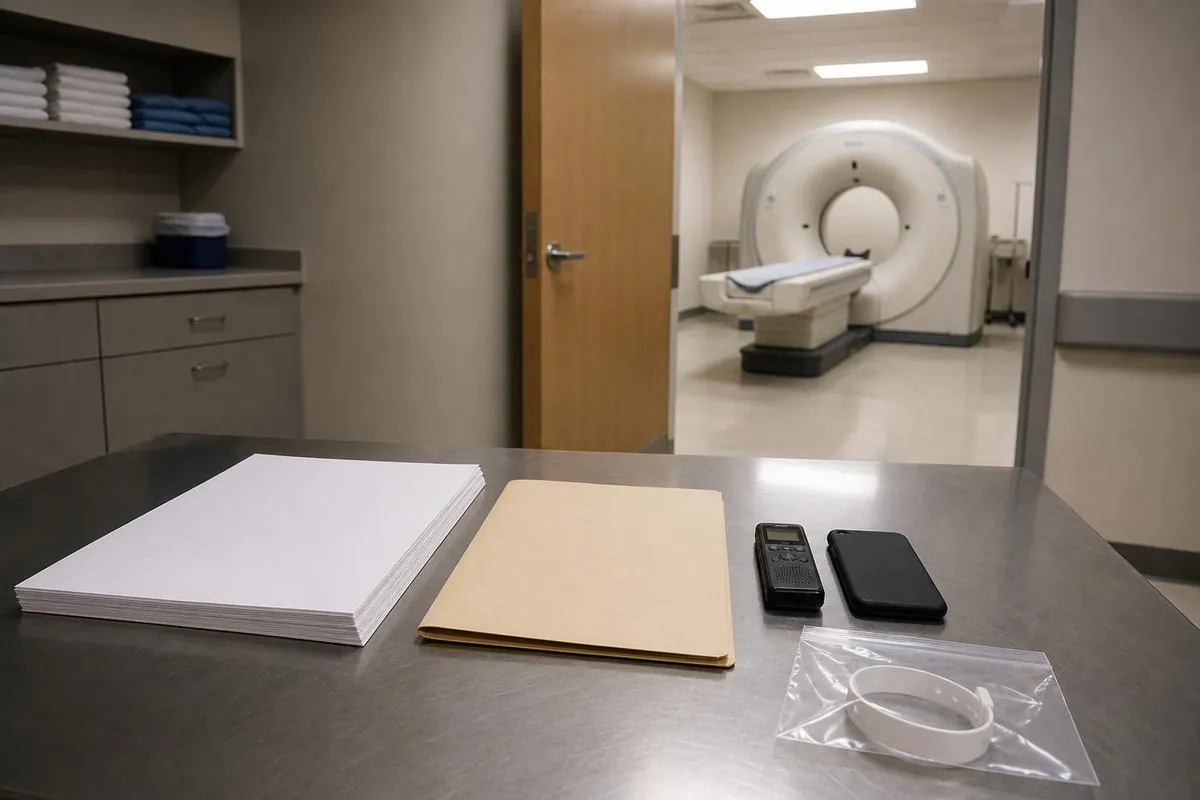
If concentration is difficult, ask a trusted person to help collect documents in short sessions. Begin with one folder, digital or paper, and a one-page index. The index should identify the incident date and place, the first medical visit, current providers, and any insurer or employer claim number. Put urgent correspondence at the front.
Label each item with its source and date. A file called “emergency-discharge-October-2” is easier to locate than an unexplained screenshot. Keep a separate list of records requested but not yet received. The lawyer can then see what is available now and what may require an authorization, a preservation request, or formal discovery.
Collect the ambulance or emergency-service information if you have it, emergency-department records, hospital discharge documents, and later treatment records. Include neurology, rehabilitation, physical or occupational therapy, speech-language therapy, and other relevant care actually received. Do not arrange tests merely to create legal evidence; testing and treatment decisions belong to your healthcare providers.
Bring both imaging reports and information about where the actual images are stored. Also keep referral orders, medication lists, and restrictions on driving, work, school, or sports. A discharge summary may be only part of the record, so tell the lawyer which hospitals, practices, and therapists treated you, even if their paperwork is missing.
A normal scan should not be treated as the entire medical story. MedlinePlus’s Concussion Tests guidance explains that concussion does not show up on brain imaging; scans may instead be used to look for more serious injury, including bleeding. Save the actual results and let clinicians interpret them. Do not describe a normal scan as proof either that there was no concussion or that a particular long-term condition exists.
You generally have a HIPAA right to obtain medical and billing records from covered providers, subject to exceptions. HHS’s medical-record guidance describes that right. Request records through the provider’s usual process and keep confirmation of the request. Tell the lawyer if records are unavailable or delayed rather than postponing the consultation.
Keep photographs showing the scene, vehicles, damaged equipment, a floor condition, or other relevant surroundings. Wide views may help locate a close-up. Preserve the original photograph or video file when possible, along with when it was taken and who took it. A screenshot can be useful for reference, but it should not replace the original recording.
Write down the police department, incident number, business or property owner, and any employer or event organizer involved. If Pennsylvania State Police investigated a vehicle crash, their crash-report service allows eligible people, including those involved and their attorneys, to request a report. Local police records require the relevant department’s process. An incident report is one piece of evidence, not a substitute for the rest of the investigation.
Identify evidence you cannot collect yourself. Examples include a store’s surveillance recording, a dashcam belonging to another driver, equipment maintenance records, or a commercial vehicle’s electronic data. Record the likely custodian and the time window. Tell the lawyer promptly so preservation can be considered. Do not enter private property, access someone else’s account, or pressure a witness to obtain it.
Set aside damaged items you lawfully possess, such as a helmet or equipment, and ask about preserving them before repairs, disposal, or testing. Do not stage a second fall, collision, or demonstration. Pennsylvania Rule 4009.1 provides procedures for obtaining documents, electronically stored information, and tangible evidence during litigation. Those procedures are distinct from what you can safely bring to an initial meeting.
Make a contact list for anyone who saw the incident. Include their name, available contact information, and a brief description of what they may have seen. A person who saw the impact has a different role from someone who arrived afterward. Preserve any message they already sent, including its date, rather than rewriting it into a polished statement.
Family, friends, and coworkers may also have useful observations about functioning before and after the injury. Ask them to describe concrete events in their own words: needing repeated reminders, taking longer to complete familiar tasks, or requiring help with appointments. Identify the observer and date. Do not ask them to diagnose a brain injury, agree on a shared account, or exaggerate a change.
Keep your own timeline separate from theirs. If another person told you what happened during a memory gap, mark that information as reported by that person. This lets the lawyer distinguish your recollection, contemporaneous documents, and someone else’s observations without treating all three as interchangeable.
A brief dated log can organize what to tell your clinician and lawyer. Note the symptom, when it occurred, what you were doing, and what happened next. Record improvements as well as difficulties. A useful entry might say that you stopped reading after ten minutes because of a headache and discussed it at a particular appointment; a broad claim that you “cannot do anything” explains much less.
Keep the log brief and focus on changes in sleep, concentration, memory, balance, and daily activities. Share new or worsening symptoms with your healthcare provider. Symptoms can vary and may appear hours or days after an injury; your notes can help you explain when you noticed a change and what you were doing at the time.
Sources: CDC guidance.
Include the activities you can still do and any assistance you need. If a family member writes an entry for you, identify that person. Do not backdate notes. When reconstructing earlier events from calendars or messages, state when you made the reconstruction and what materials you used.
Gather pay stubs, work schedules, attendance records, and written medical restrictions. Keep messages about time off, changed duties, reduced hours, or difficulties returning to work. If you are self-employed, bring invoices, appointment calendars, contracts, and other business records that help show the change in earnings. These documents give your lawyer a clearer basis for assessing lost income.
Save medical bills, insurance explanations of benefits, prescription receipts, and receipts for treatment-related travel or equipment. Keep charges, payments, and amounts still owed separate; they are not the same thing. If you receive replacement income or benefits, include the notices and payment records so the lawyer can review how those programs may affect the claim.
Track practical assistance, too. Record who helped with transportation, childcare, meal preparation, or appointments, when they helped, and whether you paid them. Avoid inventing an hourly value for unpaid help. These records can support a discussion of actual needs, while any projection of future care requires an appropriate evidentiary basis rather than a family’s guess.
Tell the lawyer about earlier head injuries, preexisting symptoms, medication changes, and relevant prior treatment. Bring older records you already have or a provider list. An accurate baseline helps frame the questions medical reviewers may need to answer. Concealing earlier symptoms makes the record less reliable and leaves important comparisons unexplored.
Preserve emails, texts, claim letters, recorded-statement requests, and documents you have signed. Include a proposed settlement or release even if you believe it covers only property damage. Note any response date and ask the lawyer to review its significance. Do not assume a telephone conversation extended a legal deadline.
Keep existing relevant social-media material and electronic messages. Do not delete or alter them to improve how the claim looks. Ask about a preservation plan before replacing a phone, closing an account, or allowing relevant recordings to disappear. The aim is an intact record, including context that a cropped image or isolated quotation may omit.
Pennsylvania generally provides a two-year limitation for personal-injury actions under 42 Pa.C.S. § 5524. The start date and any applicable exception require a facts-based legal review. Bring the incident date, dates when symptoms were noticed, and relevant correspondence. A consultation or records request is not the filing of a lawsuit.
Flag a possible government defendant immediately. Section 5522 contains a six-month notice requirement for certain claims against government units, with qualifications and exceptions. A minor’s own claim raises separate timing questions under Section 5533. These are reasons to obtain a prompt deadline assessment, not to calculate a deadline from a general article or wait until treatment ends.
After a traumatic brain injury, gathering evidence can be difficult while you are also trying to manage treatment and changes in daily life. Fulginiti Law handles traumatic brain injury and catastrophic-injury matters. We can help identify the records and other evidence needed to investigate what happened and document how the injury has affected you.
Ken Fulginiti handles serious injuries arising from trucking crashes, construction accidents, product defects, premises liability, and athletic injuries. His investigations include scene analysis, electronic evidence, and forensic evaluation. In a brain-injury case, understanding how the incident occurred is only part of the work. Medical experts, life-care planners, vocational experts, or economists may also be needed to explain the effects on treatment, work, and future care.
Ken has taught fellow attorneys about traumatic brain injury cases and the investigation and proof of catastrophic-injury damages, including presentations in October 2019 and July 2021. He served as Philadelphia Trial Lawyers Association president in 2022–2023 and received the 2022 Best Lawyers Philadelphia “Lawyer of the Year” recognition for plaintiffs’ personal-injury litigation. This background informs the firm’s work developing evidence about serious injuries and the people living with them. Past results do not guarantee a similar outcome.
Bring the folder you have and explain the gaps. We can discuss what needs preservation, which records should be requested, and how treatment records, work history, and observations from people close to you may help. You do not need to finish organizing every document before asking for help.
Broader personal-injury reading by Ken Fulginiti:
Fulginiti Law reports these results in broader catastrophic-injury matters, rather than traumatic-brain-injury outcomes:
$36,000,000 settlement
Prior results do not guarantee a similar outcome. Each case is different and must be evaluated on its own facts.
Excerpts from client reviews on Google.
Fulginiti Law provided outstanding legal service for me. They were professional and went above and beyond on explaining the legal process to me on my case to get the best outcome possible.
— Victor · Read Victor’s full review on Google
Ken and his team took great care of me when I was in need.
— Rob · Read Rob’s full review on Google
If you need legal help, do not walk to the Fulginiti Law Firm – run! I cannot say enough wonderful things about Ken and his staff who just helped us settle a three-year long case that was extremely emotionally draining.
— Melissa · Read Melissa’s full review on Google
These answers provide general information about preparing evidence and checking next steps. They do not diagnose an injury or determine your individual rights or deadlines. Medical questions belong with your healthcare provider, and a lawyer must review the facts of a particular claim.
Yes, you can seek a consultation while the police report is still pending. Bring the incident date, location, investigating agency, report number if known, and any records already available. Pennsylvania State Police says crash reports are available fifteen days after the crash; that service concerns incidents investigated by PSP, not every Pennsylvania police department.
Keep a record of any request you make and tell the lawyer which department holds the report. PSP also distinguishes crash reports from other records and uses a separate process for audio or video requests. Do not assume ordering a crash report also preserves or obtains a recording. Identifying the missing material early helps the lawyer assess the appropriate next step.
Sources: Request a Copy of a Vehicle Crash Report; Records Request.
No, a normal CT scan does not by itself rule out a concussion. MedlinePlus explains that concussion does not show up on brain imaging, while imaging may be used to investigate more serious injury. CDC also describes clinical testing that considers learning, memory, concentration, and problem-solving difficulties.
Bring the actual report, information about where images can be obtained, discharge instructions, and follow-up records. Avoid interpreting the scan yourself or asking a lawyer to provide a medical diagnosis. The medical record should show what clinicians assessed and recommended. It can then be reviewed alongside the incident history and documented functioning, without treating one normal test as the answer to every medical or legal question.
Sources: Concussion Tests; About Mild TBI and Concussion.
Yes, tell both your healthcare provider and lawyer accurately whether you lost consciousness, remained awake, or do not know. Loss of consciousness is not required for every mild traumatic brain injury; MedlinePlus notes that many people with mild TBI remain conscious. CDC describes concussion as potentially resulting from a head impact or a hit to the body that rapidly moves the head and brain.
Do not turn feeling dazed into a claim that you blacked out. If a witness reports something you cannot remember, identify the witness and distinguish that account from your recollection. Bring early records even when they use different wording from later visits. A precise history gives clinicians and legal reviewers a better basis for asking follow-up questions.
Sources: Traumatic Brain Injury; About Mild TBI and Concussion.
Record when you first noticed the symptoms and obtain appropriate medical assessment. CDC says some concussion symptoms appear immediately and others emerge hours or days later. A delayed symptom does not establish its cause by itself, and the timing should be described accurately rather than adjusted to make the story seem simpler.
Keep early discharge paperwork, later appointment records, and dated messages or calendar entries that help establish the sequence. Identify any intervening incident or relevant health change. CDC advises telling a healthcare provider about persistent or worsening symptoms. For the legal consultation, distinguish the incident date, symptom onset, and diagnosis date; they answer different questions and should not be collapsed into a single assumed date.
Sources: Symptoms of Mild TBI and Concussion; What to Do After a Mild TBI or Concussion.
A covered provider cannot deny you a copy of your records simply because you have not paid for the care. HHS explains that HIPAA generally allows access to medical and billing records, with exceptions, and that reasonable copying and mailing costs may apply. Access to separately maintained psychotherapy notes is treated differently.
Request the records through the provider’s designated process and keep the request and any response. If available, a patient portal may provide some material sooner, but check what is actually included. HHS’s access guidance says providers normally have up to thirty days to provide a copy. Tell the lawyer about a refusal or delay and bring what you have instead of waiting indefinitely for a complete file.
Sources: Your Medical Records; Get it. Check it. Use it..
Preserve the record as received and ask the provider about its amendment process. HHS explains that patients can request a correction and, when a provider disagrees, can have a statement of disagreement added to the record. Do not edit the original document or present an altered copy as the hospital’s record.
Identify the disputed entry, why you believe it is inaccurate, and any supporting material, such as a contemporaneous message or incident report. Keep the amendment request and response with the original. HHS also encourages checking records for completeness. During the consultation, explain the discrepancy rather than hiding it; the lawyer can assess its significance in the context of the full timeline and other evidence.
Sources: Your Medical Records; Get it. Check it. Use it..
Yes, flag possible government involvement promptly because special notice and liability questions may apply. Pennsylvania’s Section 5522 contains a six-month written-notice requirement for certain injury claims against government units, subject to statutory qualifications and exceptions. The ordinary two-year personal-injury limitation in Section 5524 is not the only timing provision a lawyer may need to consider.
Bring the agency name, vehicle or property identification, incident date and place, and every communication you received. Do not assume an incident report or insurance claim satisfies a statutory notice requirement. Ask the lawyer to determine whether a notice is required, where it belongs, and what deadline applies. Evidence gathering should proceed alongside that review rather than becoming a reason to postpone it.
Sources: 42 Pa.C.S. § 5522: Six months limitation; 42 Pa.C.S. § 5524: Two year limitation.
No, a potentially different filing deadline is not a reason to postpone preserving evidence. Section 5533 generally excludes minority from the limitations period for an unemancipated minor’s own civil claim. Section 5524 supplies the general personal-injury limitation. The interaction of those rules and any separate claims needs individual legal review.
Keep the child’s treatment records, relevant school communications, incident information, and records of assistance or accommodations. Identify which records concern the child and which concern a parent’s expenses or losses. Ask the lawyer to assess each claim’s timing instead of assuming every family member shares the child’s deadline. Meanwhile, retain original files and identify witnesses while their information remains accessible.
Sources: 42 Pa.C.S. § 5533: Infancy, insanity or imprisonment; 42 Pa.C.S. § 5524: Two year limitation.
Screenshots can help organize a consultation, but keep the original material and available context as well. Pennsylvania Rule 4009.1 expressly addresses electronically stored information and allows production-format questions to be addressed through discovery. A picture of a screen may omit a longer conversation, attachment, or information about the original file.
Preserve relevant material without deleting unfavorable items or cropping away context. Note which device or account holds it, and ask the lawyer how to maintain it before replacing a device or closing an account. If records belong to someone else, identify that person rather than accessing the account yourself. PSP’s records guidance also shows that official audio and video can require a different request route from ordinary reports.
Sources: Pa.R.C.P. 4009.1: Production of Documents and Things; Records Request.
Yes, a trusted family member can help organize documents and write down observations, with your permission. MedlinePlus describes memory and concentration difficulties among possible TBI symptoms, and CDC encourages staying connected with loved ones during recovery. Assistance can make preparation more manageable without changing whose experience the evidence describes.
Label who created each note, what that person personally observed, and when. Keep the patient’s own account separate from a helper’s reconstruction. A family member can prepare a provider list, collect receipts, or attend a consultation if appropriate, but should not guess missing memories or make medical conclusions. Ask the lawyer and providers about any authorization needed for another person to obtain records or discuss confidential matters.
Sources: Traumatic Brain Injury; What to Do After a Mild TBI or Concussion.
Related reading: The One Piece of Evidence Nobody Appreciated


Related Fulginiti Law Videos and Social Posts