I was very impressed with the attention, care, and professionalism I received from Ken and his team.
— Enid · Read Enid’s full review on Google
 Fulginiti Law
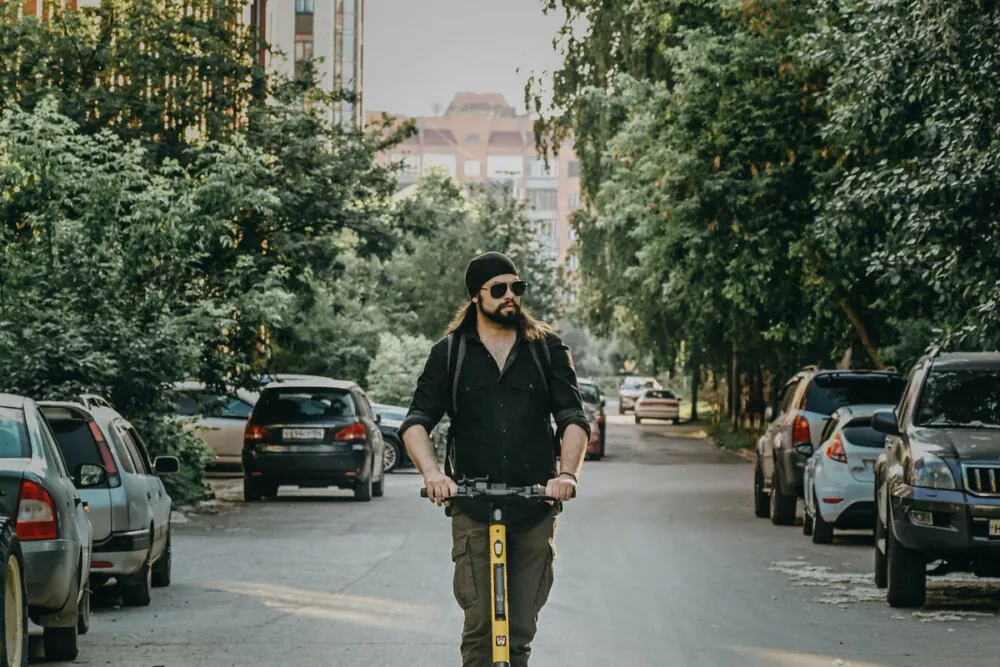
Philadelphia runs on wheels that are not cars: commuters crossing Center City before the offices open, students moving between campuses in University City, delivery riders working through dinner in Fishtown and South Philly. Electric scooters and e-bikes are part of that traffic — and when a rider goes down, the injuries are rarely minor. A collision that bends a car’s fender can mean a brain injury, a shattered wrist or a spinal injury for the person standing on a scooter deck.
Fulginiti Law is based in Philadelphia and represents people with catastrophic injuries. This page is about scooter and e-bike crashes in this city specifically: where they happen, why Philadelphia’s rules are unusual, and what a claim looks like when the defendant is a driver, a manufacturer or the City itself.
Philadelphia’s crash patterns follow its streets. The dense Center City grid puts riders beside turning cars at every corner. The protected lanes on Spruce and Pine and the painted lanes across the city help — until a delivery van double-parks in one and forces a rider into traffic. Trolley tracks in West and Southwest Philadelphia catch narrow scooter and bicycle wheels and throw riders without any car being involved at all. In University City, riders mix with buses, hospital traffic and construction around Penn and Drexel. And on corridors the City itself has identified as its high-injury network, the same names recur in crash reports year after year.
The City’s Complete Streets program exists because Philadelphia recognized that people outside cars were being killed and seriously injured at unacceptable rates. That recognition does not prevent the crashes. It does mean the City keeps records — street designs, resurfacing history, prior complaints — that can matter when a roadway condition contributes to a rider’s injuries.
Philadelphia follows Pennsylvania law, and Pennsylvania law has never clearly authorized privately owned electric scooters on public streets. The Vehicle Code’s categories were written before these devices existed: a stand-up e-scooter is not a “pedalcycle with electric assist” (it has no pedals), it is not an electric personal assistive mobility device, and it cannot meet the titling, registration and insurance requirements that apply to motor-driven cycles. Operating a motor vehicle on a sidewalk is separately prohibited. The scooter-share pilot that ran in Pittsburgh under a state authorization expired in 2023, Philadelphia was never part of it, and when Harrisburg most recently debated authorizing scooter programs for smaller cities, Philadelphia was left out at the City’s own request.
E-bikes are different. An e-bike that meets the statutory definition — operable pedals, a motor of 750 watts or less, top assisted speed of 20 miles per hour — is treated as a bicycle in Pennsylvania, with the same rights and duties as any other cyclist. Indego’s fleet, including its e-bikes, operates in that category. Where the device in your crash falls matters: it shapes the insurance fight and the fault arguments the defense will make. It does not give a negligent driver a free pass — a driver who hits a rider still answers for their own carelessness, and fault in Pennsylvania is compared, not absolute.

CALL NOW
215-774-5162Turning traffic in the grid. Left turns across bike lanes, right turns through crosswalks and drivers pulling from parking lanes account for a large share of the serious cases we review in Center City and along the avenues.
Trolley tracks and steel plates. Embedded rail, wet steel and construction plates are uniquely dangerous to small wheels. A rider can lose the front wheel in a track groove at low speed and still suffer a head injury or a broken hip in the fall.
Blocked bike lanes. Double-parked delivery vehicles and ride-share stops force riders into moving traffic at exactly the points where drivers least expect them.
Road surface failures. Potholes, sunken utility cuts and broken pavement that a car absorbs can stop a scooter outright. When the surface is the cause, the claim may run against the City or the utility that opened the street — with short notice deadlines and capped damages.
Device failures. Battery fires in apartments and dorm rooms, collapsing stems and brake failures create product-liability cases against manufacturers — and, in fire cases, victims who were never on the scooter at all.
Evidence disappears fast in scooter cases. A rented scooter’s trip data, GPS trace and maintenance record sit with the operator, and they are routinely purged on short cycles. SEPTA vehicles, storefronts and city traffic cameras cover many of the corridors where crashes happen, but the footage is overwritten — sometimes within days. Photograph the scooter, the plate or QR identifier, the street surface and your injuries, save the rental receipt from the app, and get counsel involved early enough to send preservation letters before the records cycle out.
Some Philadelphia scooter cases are not really about a driver. A street defect, a dangerous construction layout or a transit vehicle’s maneuver can be the cause — and public defendants play by different rules. Claims against the City of Philadelphia and other government units generally require written notice within six months, and the Tort Claims Act caps what can be recovered and limits the categories of claims that can be brought at all. SEPTA claims carry their own procedures as a Commonwealth agency.
These deadlines are why a rider hurt by a roadway condition should not wait for the two-year statute of limitations to become an issue — the notice clock runs out long before it. The investigation is also different: street-opening permits, resurfacing schedules, prior 311 complaints and the City’s own design documents become the evidence. Our firm handles that investigation the same way it handles construction-site cases, with engineers engaged early.
CALL NOW
215-774-5162There is no insurance policy on an electric scooter in Pennsylvania — the device cannot be registered, so it cannot carry one. After a crash, coverage is assembled from other policies: the striking driver’s liability coverage first; your health insurance for the immediate bills, usually with a right to repayment from the recovery; and uninsured/underinsured motorist coverage under your own auto policy or a household member’s, which can apply even though you were not in a car. Whether your limited-tort election limits the claim is a question adjusters answer too quickly — riders are not vehicle occupants, and the statute has exceptions. It deserves analysis by someone on your side.
Camera evidence is the other Philadelphia-specific issue. Center City and the transit system are covered by cameras — storefronts, SEPTA vehicles, traffic signals — but the footage is overwritten on short cycles. Identifying and preserving video is one of the first things our firm does in a city scooter case, before the record of how the crash happened disappears.
The value of the case follows the injury, not the device. Catastrophic outcomes — traumatic brain injury, spinal cord damage, severe fractures requiring surgery, burn injuries from battery fires — carry medical costs, future care needs and lost earning capacity that have to be proven with experts. Pennsylvania law allows recovery of economic losses and, subject to the fault comparison, compensation for pain, suffering and loss of life’s pleasures. Fulginiti Law handles catastrophic injury cases exclusively; that selectivity is deliberate, because these are the cases where expert-driven preparation changes the outcome.
The firm is here, in Philadelphia, and founder Ken Fulginiti tries the cases it takes. A scooter case at this firm gets the same treatment as a truck or construction case: immediate evidence preservation, engineering and medical experts matched to the injury, and a file prepared for trial in the Philadelphia Court of Common Pleas rather than for a quick settlement call. Consultations are free, and the firm works on contingency — no recovery, no fee.
Broader personal-injury reading by Ken Fulginiti:
These answers provide general information about Philadelphia scooter and e-bike claims. Your device, the roadway and the parties involved require individual review.
Philadelphia follows Pennsylvania law, and state law does not clearly authorize privately owned e-scooters on public streets or sidewalks. The Vehicle Code’s device categories predate stand-up scooters: they lack the pedals required of a “pedalcycle with electric assist,” they are not self-balancing assistive devices, and they cannot be titled, registered or insured like motor-driven cycles. The Vehicle Code also prohibits operating a motor vehicle on a sidewalk. Electrical hazards cause harm beyond job sites, and a Philadelphia electrical accidents lawyer can help victims of shocks and burns pursue a claim.
Philadelphia never had the shared-scooter pilot that operated briefly in Pittsburgh, and the City asked to be left out of the most recent state legislation that would have authorized scooter programs in smaller cities. Riders are everywhere regardless — which is why, after a crash, the important question is usually not the citation exposure but fault and insurance. A driver’s negligence is actionable even if the defense argues about the scooter’s status.
Sources: 75 Pa.C.S. § 3703: Motor Vehicles on Sidewalks; 75 Pa.C.S. § 3501: Bicyclists’ Rights and Duties
The patterns follow the street design. Center City’s grid produces turning-vehicle collisions at corners; the avenues produce mid-block crashes where riders leave blocked bike lanes; West and Southwest Philadelphia add trolley tracks that capture narrow wheels; and the corridors on the City’s high-injury network — the streets its Complete Streets and Vision Zero work identifies as the most dangerous — account for a disproportionate share of serious injuries to people outside cars. Children hurt as passengers need special care with a claim, and a Philadelphia child car accident injury lawyer can help families through the process.
Where the crash happened matters legally as well as factually. A crash caused by a street condition may support a claim against the City or a utility; a crash in a bike lane raises questions about the vehicle’s movement and the lane design; a crash on a state route inside the city can involve PennDOT instead. Identifying the roadway owner is an early investigative step, not a detail.
Sources: City of Philadelphia: Complete Streets; Pennsylvania State Police: Crash Reports
Usually the turning driver bears the primary fault. Pennsylvania law requires drivers to yield and to turn without interfering with others lawfully using the road, and a driver who crosses a bike lane must check for the traffic that lane carries — including riders who are smaller and faster than pedestrians. The driver’s insurer will often respond that the rider “came out of nowhere”; bike-lane position, signal phase and sight lines are the facts that answer that argument, which is why they are documented immediately.
Pennsylvania compares fault rather than assigning all of it to one side. Even if the defense establishes some fault on the rider — speed, lighting, lane position — a rider whose share does not exceed the defendants’ still recovers, reduced proportionally. Do not let an adjuster’s early fault lecture close the conversation; it is a negotiating position, not a verdict.
Sources: 42 Pa.C.S. § 7102: Comparative Negligence; 75 Pa.C.S. § 3331: Turning Without Interfering
Yes, in the right circumstances — but the rules are stricter than for an ordinary driver. The Political Subdivision Tort Claims Act limits the kinds of claims that can be brought against the City, caps recoverable damages, and requires the City to have had notice of the dangerous condition. Separately, written notice of the claim itself is generally due within six months of the crash. Trolley-track cases typically require proof that the track area’s condition — a groove gap, broken surrounding pavement, a raised rail — was unreasonably dangerous, often with engineering testimony.
The six-month notice deadline is the trap. Riders focused on medical care routinely pass it without knowing it existed, and a late claim is usually a lost claim regardless of merit. If a street condition, track or construction plate played any role in your crash, have the claim evaluated immediately — before the notice window closes.
Sources: 42 Pa.C.S. § 5522: Notice to Government Units; City of Philadelphia: Complete Streets
Your legal position is stronger and simpler. An e-bike that fits Pennsylvania’s definition of a pedalcycle with electric assist — working pedals, a motor of no more than 750 watts, assistance topping out at 20 miles per hour — is treated as a bicycle. Its rider has the same rights and duties as any cyclist, including the right to the road and to the protection of the four-foot passing law. Indego’s bikes and e-bikes operate in this category.
Above those limits, the analysis changes: a faster, more powerful device can be treated as a motor-driven cycle or motorcycle, with licensing and registration consequences the defense will raise. Bring the device’s make, model and specifications to your consultation. For the many riders on standard Class 1, 2 and most Class 3 e-bikes, the crash claim proceeds like a bicycle claim — driver negligence, insurance assembly and comparative fault.
Sources: 75 Pa.C.S. § 3501: Bicyclists’ Rights and Duties; 75 Pa.C.S. § 3303: Passing a Bicycle — Four Feet
Often, yes. A hit-and-run converts the claim first into an uninsured-motorist claim — and the most common source is your own auto policy, or a policy held by a relative in your household, which can cover you even though you were on a scooter. Philadelphia’s camera density also gives hit-and-run investigations more to work with here than in most places: SEPTA vehicles, storefronts and traffic cameras frequently capture what witnesses did not.
Report the crash to the police immediately — uninsured-motorist coverage usually requires it, and policies impose notice deadlines of their own. Then preserve what you can: the direction of flight, vehicle description, any partial plate, and the names of anyone who stopped. Our firm sends preservation requests for camera footage early, because transit and retail video is overwritten quickly.
Sources: PA Insurance Department: Auto Insurance Guide; Pennsylvania State Police: Crash Reports
A report is not legally required to bring a claim, but it is close to indispensable in practice. The report fixes the time, place, parties and initial observations before memories move; insurers ask for it; uninsured-motorist claims typically demand prompt police notification; and in a case against the City, the report helps establish the location and condition that the notice letter must describe. If police did not respond, a report can still be made — and for state routes, crash records are also obtainable through the State Police portal.
What the report says is a starting point, not the conclusion. Officers reconstruct quickly, sometimes without rider input if the rider was taken to a hospital. If the report misstates how the crash happened — your lane position, the light phase, who was present — tell your lawyer promptly; corrections and supplemental statements are far easier early than after positions harden.
Sources: Pennsylvania State Police: Crash Reports; 42 Pa.C.S. § 5522: Notice to Government Units
The general Pennsylvania deadline for a personal-injury lawsuit is two years from the crash, and a case against a private driver is filed in the Philadelphia Court of Common Pleas. A child’s own claim is generally tolled during minority. But the two-year period is the least urgent deadline in most scooter cases.
If any part of the claim targets the City, SEPTA or another government unit, written notice is generally due within six months, and the damages available are capped by statute. Uninsured-motorist claims carry contractual notice requirements as well. And some evidence — camera footage above all — survives only days. The practical answer: have the case reviewed in the first weeks, while every theory is still available.
Sources: 42 Pa.C.S. § 5524: Two-Year Limitation; 42 Pa.C.S. § 5522: Notice to Government Units
Video first. SEPTA, traffic and retail camera systems overwrite on cycles measured in days, and the single best account of a Center City crash is often a recording nobody requested in time. Second, the street itself: potholes are filled, plates are removed, construction layouts change, and a defect case becomes an argument about photographs that were never taken.
Third, the device and its data. The scooter or e-bike should be kept unaltered — no repairs, no returns, no surrender to an insurer — because its condition supports both defect claims and the defense’s expected arguments about lighting and brakes. Riding-app and phone location data should be exported before accounts cycle. A lawyer’s preservation letters, sent in the first days, are the standard mechanism for holding all of this in place.
Sources: Pennsylvania State Police: Crash Reports; CPSC: Micromobility Information Center
You tell us what happened; we ask about the device, the roadway, your injuries and your treatment, and any insurance contact so far. We then explain — candidly — which claims appear viable (driver, manufacturer, City or some combination), which deadlines are already running, and what the investigation would involve. There is no fee for the consultation and no obligation to hire the firm.
Fulginiti Law takes catastrophic-injury cases: brain injuries, spinal injuries, severe fractures, burns and deaths. If your case fits that profile, the firm will tell you how it would be staffed and financed — contingency fee, no fee without a recovery. If it does not fit, you will hear that too, along with what we would do in your position. Either way, you leave with the deadlines identified, which is the thing riders most often lose before they ever call.
Sources: 42 Pa.C.S. § 5524: Two-Year Limitation; PA Insurance Department: Auto Insurance Guide
Fulginiti Law represents injured riders across Philadelphia, including:
If you were seriously hurt on a scooter or e-bike in Philadelphia, the most time-sensitive evidence — camera footage, the device, the street condition — is also the easiest to lose. Fulginiti Law will review the crash, identify every potentially responsible party, and tell you honestly what your options are. The consultation is free.
CALL NOW
215-774-5162One Commerce Square
2005 Market Street, Suite 3710
Philadelphia, PA 19103


Related Fulginiti Law Videos and Social Posts