I was very impressed with the attention, care, and professionalism I received from Ken and his team.
— Enid · Read Enid’s full review on Google
 Fulginiti Law
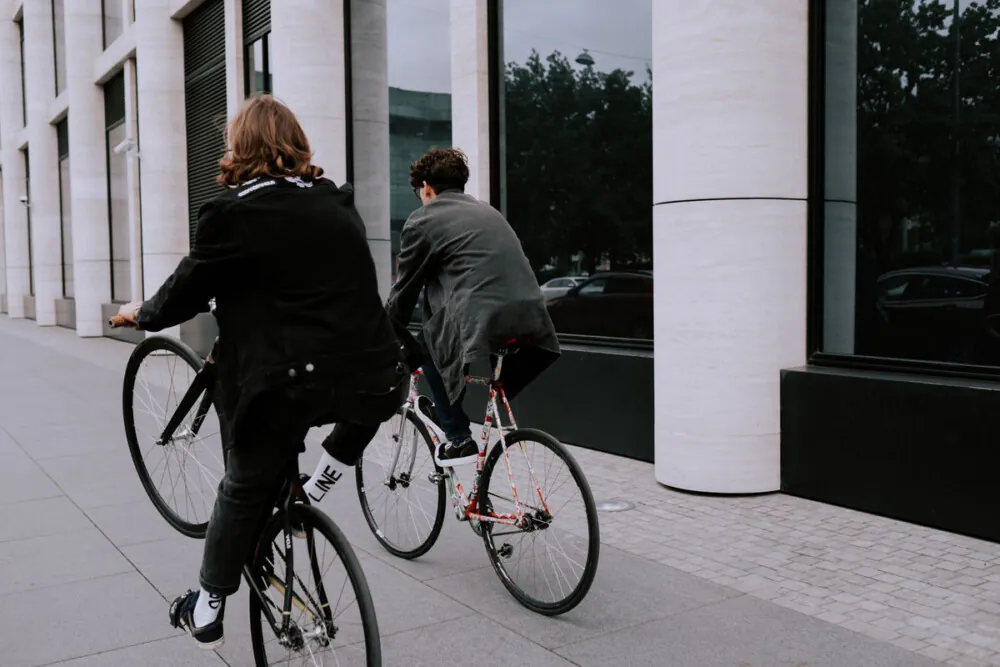
A bicycle is a vehicle under Pennsylvania law, and the person riding it has the same right to the road as anyone driving a car. What the cyclist does not have is protection. When a driver turns across a bike lane on Pine Street, opens a door on Passyunk Avenue or passes with inches to spare on a narrow Manayunk street, the cyclist absorbs the entire collision. The injuries in the cases our firm reviews — brain injuries, spinal injuries, shattered joints — are catastrophic out of all proportion to the speeds involved.
Fulginiti Law is a Philadelphia-based catastrophic-injury firm. This page explains the Pennsylvania and Philadelphia law that governs bicycle crashes, the insurance questions that follow, and how these cases are built. The firm represents injured cyclists in Philadelphia and across Pennsylvania — and because the Vehicle Code itself is what proves fault in most of these cases, an injured rider needs an attorney who works from the Code, not from an adjuster’s summary of it.
Cyclists are vehicle operators. Section 3501 of the Vehicle Code grants people riding bicycles all of the rights and all of the duties that apply to the driver of a vehicle. A cyclist is not a guest on the road; traffic law protects and binds riders equally.
The four-foot passing law. Under § 3303(a)(3), a driver overtaking a bicycle traveling in the same direction must pass to the left with no less than four feet of clearance, at a careful and prudent reduced speed. Pennsylvania’s rule is among the most protective in the country, and “I didn’t see him” or “he was in my way” is not a defense to passing too close.
Passing in a no-passing zone. Section 3307(b.1) allows a driver to cross the center line in a no-passing zone to pass a cyclist — when it can be done safely with the required clearance. The law prefers a wide, careful pass to a squeezed one.
Turning drivers must not cut off a cyclist. Under § 3331(e), a driver who is turning may not interfere with a bicyclist proceeding straight in accordance with the rules of the road. The right hook — a car turning right across a cyclist going straight — is a statutory violation, not an unfortunate misunderstanding.
Lane position and helmets. Cyclists generally ride in the right-hand lane or as close to the right as practicable, but the Code expressly permits using the full lane where the lane is too narrow to share or the surface is unsafe — the “take the lane” rule. Pennsylvania requires an approved helmet for riders under 12; there is no general adult helmet mandate. These are the provisions a Pennsylvania bicycle accident attorney will test the driver’s conduct against after a crash.
CALL NOW
215-774-5162Right hooks and left crosses. The two classic intersection crashes: a driver turning right across a cyclist proceeding straight, and a driver turning left across an oncoming cyclist they misjudged or never saw. Both patterns put the statutory duties above at the center of the case.
Dooring. A parked driver or passenger opens a door into a cyclist’s path. There is no time to react and often nowhere to go; the resulting falls cause head injuries, fractures and secondary collisions with traffic.
Close passes and lane incursions. Violations of the four-foot law that end in contact — or in a rider forced off the road without contact at all. A driver does not have to touch the cyclist to be liable for the crash.
Street surfaces. Trolley tracks, steel construction plates, sunken utility cuts and broken pavement are hazards to bicycles that are trivial to cars. Where the surface is the cause, claims against the City, SEPTA or a utility may exist, with short notice deadlines and statutory caps.
Blocked lanes and delivery traffic. Double-parked vans and ride-share vehicles force cyclists out of protected lanes into traffic streams — a pattern repeated daily on Philadelphia’s busiest corridors.
The firm’s bicycle cases involve the injuries that change a life rather than interrupt a month: traumatic brain injuries, including injuries suffered by helmeted riders; spinal cord injuries and paralysis; complex fractures of the pelvis, hip, wrist and collarbone requiring surgery; facial and dental injuries; and severe road rash with grafting. Because Fulginiti Law limits its practice to catastrophic injury, the medical proof in these cases — treating physicians, rehabilitation specialists, life-care planners — is assembled to the standard the injury deserves, not the standard of a quick settlement.
CALL NOW
215-774-5162The striking driver’s liability policy is the primary source of recovery. Two features of Pennsylvania law surprise many cyclists. First, your own insurance may also be in play: first-party medical benefits and uninsured/underinsured motorist coverage under your household’s auto policies can apply to a family member struck while riding a bicycle, and auditing those policies is a standard early step in our cases. Second, limited tort: an adjuster may claim your limited-tort election bars compensation for pain and suffering. A cyclist is not an occupant of a motor vehicle, and the statute contains exceptions; that assertion should never go unexamined.
Fault is comparative. Under 42 Pa.C.S. § 7102, an injured cyclist who is not more than 50 percent at fault recovers, reduced by their share. Defense themes in bicycle cases are predictable — speed, lighting, lane position, helmet use — and each has a factual answer when the scene, the bicycle and the data are preserved. A helmet’s absence, for an adult, is not a legal defense to causing the crash, however loudly it is argued.
An injured adult generally has two years from the crash to file suit under 42 Pa.C.S. § 5524; an injured child’s claim is generally tolled during minority under § 5533(b). Claims involving a city street condition or a transit agency carry a six-month written-notice requirement and statutory caps, and those clocks — not the two-year statute — set the real schedule in surface-defect cases. Recoverable damages include medical costs past and future, lost income and earning capacity, the cost of ongoing care and assistance, and compensation for pain, suffering and loss of life’s pleasures, proven with the experts the injury requires.
Founder Ken Fulginiti built this firm for catastrophic cases. Bicycle litigation at Fulginiti Law is handled the way the firm handles truck and construction litigation: immediate scene and evidence work, engineers where the mechanics matter, treating-doctor and life-care proof where the medicine matters, and preparation for trial in the Philadelphia Court of Common Pleas. Consultations are free, and representation is on contingency — no fee unless there is a recovery.
Broader personal-injury reading by Ken Fulginiti:
These answers provide general information about Pennsylvania and Philadelphia bicycle claims. The roadway, the vehicles and your injuries require individual review.
Yes. Section 3501 of the Pennsylvania Vehicle Code provides that a person riding a bicycle on a roadway has all of the rights and all of the duties applicable to the driver of a vehicle. That single rule drives the whole case: drivers owe cyclists the same care they owe other vehicles, and a cyclist who is following the rules of the road is lawfully present wherever the crash happens.
The classification also means traffic-law violations matter on both sides. A driver’s failure to yield, an unsafe pass or a turn across a cyclist’s path is not merely carelessness — it is a violation of duties the Code spells out. At the same time, cyclists are expected to obey signals and ride with traffic, and the defense will examine those duties in any claim. The statute cuts both ways, which is why the facts of the roadway matter so much.
Sources: 75 Pa.C.S. § 3501: Bicyclists’ Rights and Duties; NHTSA: Bicycle Safety
Under 75 Pa.C.S. § 3303(a)(3), a driver overtaking a bicycle traveling in the same direction must pass to the left of the bicycle with no less than four feet of clearance, at a careful and prudent reduced speed. Pennsylvania was an early adopter of a four-foot standard, and the duty belongs entirely to the driver — it is not the cyclist’s job to hug the curb so a close pass becomes possible.
The companion rule in § 3307(b.1) lets a driver cross the center line in a no-passing zone to complete a bicycle pass legally, provided it can be done safely. Together the two provisions answer the most common defense in a close-pass case — “there wasn’t room” — because the Code told the driver exactly what to do when there wasn’t room: wait, or use the other lane when it is clear.
Sources: 75 Pa.C.S. § 3303: Passing a Bicycle — Four Feet; 75 Pa.C.S. § 3307: Passing in a No-Passing Zone
Yes — Pennsylvania law expressly permits it for bicycles. Section 3307(b.1) allows a driver to disregard a no-passing marking to overtake a pedalcycle when the pass can be made safely, with due care and with the four feet of clearance the passing statute requires. The exception exists so that drivers are not tempted to squeeze past within the lane on narrow roads.
In practice this means a driver who clips a cyclist on a two-lane road rarely has a legal excuse rooted in the road markings. The questions become factual: how much clearance was given, at what speed, and with what view ahead. Vehicle damage patterns, the cyclist’s GPS data and witness accounts usually answer them.
Sources: 75 Pa.C.S. § 3307: Passing in a No-Passing Zone; 75 Pa.C.S. § 3303: Passing a Bicycle — Four Feet
Yes. Pennsylvania has no statute labeled “dooring,” but the claim does not need one: opening a vehicle door into moving traffic without checking for approaching road users — including cyclists, who are vehicle operators under the Code — is a failure of ordinary care, and the person who opened the door (and, through their policy, their insurer) answers for the harm. These cases often turn on visibility: whether the cyclist was lit, positioned predictably and visible in the mirror the occupant did not use.
Preserve the geometry of the crash if you can — the door’s position, the bike lane’s markings, where your bicycle landed. Photographs taken at the scene decide arguments that witness memory cannot. If you were forced to swerve into traffic rather than strike the door, tell your lawyer at the first conversation; the analysis differs slightly but the claim is equally real.
Sources: 75 Pa.C.S. § 3501: Bicyclists’ Rights and Duties; 42 Pa.C.S. § 7102: Comparative Negligence
Pennsylvania requires an approved helmet for bicycle riders under 12 years old, and for children in trailers and child seats. There is no helmet mandate for older riders. As a safety matter the firm recommends helmets without qualification — head injuries are the most devastating outcomes in our bicycle cases — but as a legal matter, an adult’s bare head is not a defense to a driver’s negligence.
Expect the defense to raise helmet use anyway, usually as a comparative-fault or damages theme. Pennsylvania’s comparative-negligence framework asks who caused the crash, and a helmet does not cause or prevent the collision itself. Where the injury is to the head, the defense may argue about mitigation; that argument is met with medical evidence about the specific impact, not conceded in the abstract.
Sources: 75 Pa.C.S. § 3510: Child Helmet Requirement; NHTSA: Bicycle Safety
Very often, yes — and many injured cyclists never learn it. Pennsylvania’s first-party benefit and uninsured/underinsured motorist systems are built around people, not just vehicles they occupy. A cyclist struck by a car may have first-party medical benefits available through their own auto policy, and UM/UIM coverage can respond when the driver who caused the crash is uninsured, underinsured or gone. Policies of relatives living in the same household may also apply.
The priority rules among overlapping policies are technical, and insurers do not volunteer the analysis. Our firm audits every auto policy in the household at the start of a bicycle case — the audit regularly finds coverage the family did not know it had paid for. Keep your policy declarations pages; they are part of the case file.
Sources: PA Insurance Department: Auto Insurance Guide; 75 Pa.C.S. § 1711: First-Party Medical Benefits
A hit-and-run does not end the claim. The recovery path usually runs through uninsured motorist coverage — yours or a household member’s — which is designed for exactly this event. Two things protect that path: a prompt police report (typically required by the policy) and prompt notice to your own insurer. Philadelphia’s camera coverage also gives the identification effort real material to work with, if footage is requested before it is overwritten.
There may also be claims that do not depend on the driver: a surface-defect claim if the roadway contributed, or a product claim if a component — a fork, a stem, a wheel — failed and worsened the outcome. Each alternative has its own deadline, which is another reason a hit-and-run bicycle case should be evaluated in the first weeks rather than after the driver’s insurer search comes back empty.
Sources: PA Insurance Department: Auto Insurance Guide; Pennsylvania State Police: Crash Reports
Yes, within limits. Claims against the City proceed under the Political Subdivision Tort Claims Act, which requires proof that the City had notice of a dangerous condition and limits both the categories of recoverable claims and the amount of damages. Written notice of the claim is generally due within six months — a deadline that destroys more surface-defect cases than any trial ever does.
Trolley-track and plate cases are engineering cases. The questions are the groove gap, the angle of approach the design forces on a cyclist, the condition of the surrounding pavement and what the City and SEPTA knew about prior incidents at the same location. If a surface played any role in your crash, photograph it with a ruler or coin for scale before it is repaired, and have the notice obligation handled immediately.
Sources: 42 Pa.C.S. § 5522: Notice to Government Units; City of Philadelphia: Complete Streets
Generally two years from the crash for an injured adult, under 42 Pa.C.S. § 5524. A child’s own claim is generally tolled until the child reaches adulthood under § 5533(b). Those periods are the outer frame; several shorter deadlines can control the practical outcome of a bicycle case.
Government notice for a street-defect claim runs in six months. Uninsured-motorist provisions in your own policy impose their own notice requirements. Video evidence may last two weeks. The right way to use the two-year statute is as a backstop: the investigation, coverage audit and preservation steps belong in the first month, when the evidence and the options are all still intact.
Sources: 42 Pa.C.S. § 5524: Two-Year Limitation; 42 Pa.C.S. § 5533: Tolling for Minors
Start with the bicycle and helmet, unrepaired and unaltered — impact damage patterns corroborate speed, direction and point of contact better than any recollection. Photograph the scene, the vehicle, the lane markings and any surface defect, with your injuries documented as they evolve. Then preserve the digital record: export your GPS ride file before it cycles, save the app data, and note every camera — SEPTA, storefront, traffic — that might have recorded the block.
The police report anchors the file; obtain it (crash reports are available through the State Police portal) and flag any inaccuracies to your lawyer early, while a supplemental statement can still correct them. Finally, keep every insurance letter and bill. The file you assemble in the first two weeks is, to a large extent, the case you will have in year two.
Sources: Pennsylvania State Police: Crash Reports; NHTSA: Bicycle Safety
Fulginiti Law represents injured cyclists across Philadelphia and Pennsylvania, including riders hurt in:
If a crash left you with a serious injury, the first questions — which policies respond, which deadlines are running, what evidence still exists — have answers, and some of them expire. Fulginiti Law will review the crash, tell you candidly where you stand, and explain the path from here. The consultation is free.
CALL NOW
215-774-5162One Commerce Square
2005 Market Street, Suite 3710
Philadelphia, PA 19103


Related Fulginiti Law Videos and Social Posts