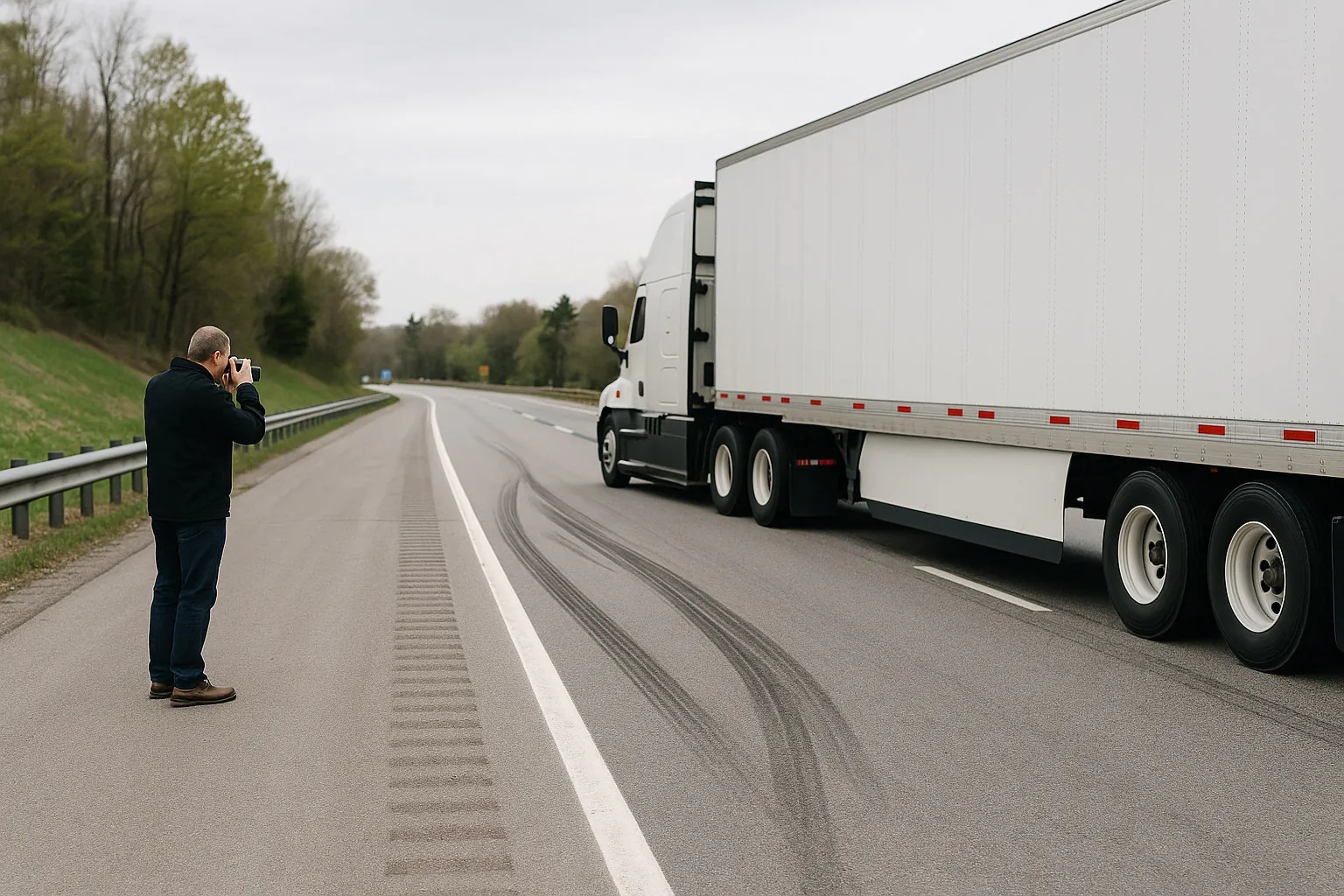
After a serious truck crash, crucial evidence does not automatically go into a neutral vault. The truck, electronic data, maintenance files, driver logs, video, and company communications may remain with the carrier or several outside vendors.
Some records must be retained for months or years. Others may be overwritten, altered through routine repairs, or lost much sooner. A Pennsylvania trucking accidents lawyer can identify who controls each source and take steps to preserve it before normal business operations change the evidence.
That early work matters because a commercial truck may contain electronic information about vehicle speed, braking, engine operation, and other conditions surrounding the collision. Driver and company records may reveal fatigue, maintenance problems, or decisions made before the trip. (nhtsa.gov)
Call now
215-774-5162Where Does Truck-Crash Evidence Go?
Evidence from a Pennsylvania truck crash is usually spread among multiple people and organizations. The most useful sources often fall into four groups.
The truck, trailer, and electronic modules
The physical truck can reveal worn brakes, damaged tires, steering problems, cargo-securement failures, lighting defects, and collision damage. Its electronic control modules—often called the truck’s “black box”—may store a short record of speed, brake use, accelerator position, engine activity, or other event data.
Not every commercial vehicle records the same information. The available data depends on the truck, engine, module, software, and type of event that triggered a recording. The module may also be damaged in the crash or require proprietary equipment to download. NHTSA explains that event data recorders capture information for only a brief period surrounding an event, rather than continuously recording an entire trip. (nhtsa.gov)
Driver, dispatch, and telematics data
Electronic logging devices, or ELDs, primarily document the driver’s duty status and hours of service. Other systems may track GPS locations, vehicle movement, fuel use, hard-braking alerts, delivery timing, and messages between the driver and dispatcher.
Dashcams, collision-avoidance systems, onboard cameras, and mobile apps may hold additional evidence. Some information remains on the truck. Other data is stored by a telematics company, camera provider, logistics platform, or phone carrier.
Maintenance, inspection, and cargo records
Inspection reports and repair histories can show whether the carrier knew about a safety problem. Relevant documents may include work orders, brake and tire records, annual inspections, roadside inspection reports, and defect reports completed by drivers.
Cargo documents can identify the shipper, loader, weight, and securement instructions. For example, a dump-truck crash connected to a work site may require investigation of both trucking records and potential construction accident issues, including who loaded the vehicle and who controlled the site operation. (fulginiti-law.com)
Evidence held by independent parties
Police photographs, 911 recordings, nearby surveillance video, toll records, weather information, witness phone videos, and data from the other vehicles may help confirm or challenge the trucking company’s account.
These sources have their own retention policies. A nearby business’s camera system, for instance, may record over footage before anyone realizes it captured the collision.
How Long Must Trucking Companies Keep Important Records?
Federal regulations set minimum retention periods for several types of motor-carrier records. Pennsylvania also incorporates many federal motor-carrier safety regulations for qualifying intrastate commercial vehicles, subject to state modifications and exceptions. The exact rules therefore depend on the vehicle, carrier, cargo, and type of operation. (pacodeandbulletin.gov)
Under the rules current in August 2026:
|
Evidence |
Minimum regulatory period |
Why it matters
|
|
Three months |
These reports may identify a problem reported shortly before the crash. Drivers generally do not have to prepare a report when no defect is discovered or reported. | |
|
Six months from receipt |
The records can help determine whether the driver exceeded applicable hours-of-service limits. | |
|
Six months |
The carrier must keep the backup separately from the original data. | |
|
One year, plus six months after the vehicle leaves the carrier’s control |
These records may show recurring defects, missed service, or prior repairs. | |
|
Three years |
This is a basic regulatory accident file—not a complete archive of every photograph, communication, or electronic record. |
These periods are minimum regulatory requirements, not promises that every useful item will remain available until the deadline. Dashcam footage, raw telematics, surveillance video, internal messages, and some electronic event data may follow shorter company or vendor retention policies.
The physical truck also presents a separate problem. It may be repaired, returned to service, transferred, or salvaged. A maintenance regulation requiring records does not automatically require a carrier to keep a damaged vehicle untouched for an injured person’s inspection.
How a Pennsylvania Trucking Accidents Lawyer Preserves Evidence
Preserving evidence starts with identifying everyone who may control it. That may include the driver and carrier, the tractor or trailer owner, a maintenance or loading company, and technology vendors that store data outside the truck.
A detailed preservation notice can instruct those parties not to destroy, overwrite, repair, alter, or discard specified evidence. Depending on the crash, the notice may address:
- The tractor, trailer, tires, brakes, lights, and electronic modules
- ELD records, raw telematics, GPS history, and onboard video
- Dispatch messages, trip documents, and delivery schedules
- Inspection, repair, maintenance, and cargo-loading records
The notice should be specific. A broad demand to “preserve everything” may overlook a separate vendor, trailer owner, phone, or data system.
The next step may be an agreed inspection involving qualified experts. They can photograph and measure the truck, examine its components, and perform a controlled download of available electronic data. The process should document who handled the evidence and how it was collected.
When voluntary cooperation is not enough, Pennsylvania procedure provides tools for obtaining documents, electronically stored information, and inspections. Pennsylvania procedure may also permit limited discovery before a complaint is filed when the information sought is material and necessary to the filing of the complaint. Once litigation begins, the discovery rules provide broader tools for requesting documents, electronically stored information, and inspections of property.
A preservation letter does not itself transfer possession of the truck or guarantee immediate access. It does, however, help place evidence holders on notice and create a record of what they were asked to protect.
What If Evidence Is Lost or Destroyed?
Pennsylvania courts use the term spoliation for the loss, destruction, or significant alteration of evidence relevant to pending or future litigation.
A duty to preserve can arise when a party knows litigation is pending or likely and can foresee that discarding the evidence would harm the other side. If spoliation occurs, a court considers the responsible party’s fault, the resulting prejudice, and whether a lesser remedy can address the harm. Potential consequences include excluding evidence or instructing jurors that they may draw an unfavorable inference. (pacourts.us)
A sanction is not automatic, and missing evidence does not guarantee a particular outcome. The court will examine why the evidence disappeared, whether the loss could have been prevented, and how seriously it affects the case.
What Can You Preserve After a Serious Truck Crash?
Your health comes first. Once immediate medical needs are addressed, preserve whatever is safely within your control:
- Keep your photographs, videos, dashcam files, text messages, and location data.
- Write down the truck’s company name, USDOT number, license plate, trailer number, and identifying markings.
- Save witness names and contact information.
- Do not discard your vehicle, damaged personal property, or electronic devices without first documenting them.
- Keep copies of insurance correspondence and any papers exchanged at the scene.
Do not mistake Pennsylvania’s lawsuit deadline for an evidence-preservation period. Pennsylvania law generally provides two years for negligence actions involving personal injury or death, but key trucking evidence may disappear within weeks or months. Different notice requirements or exceptions can apply to an individual case. (legis.state.pa.us)
Why Contact Fulginiti Law About Crucial Trucking Evidence?
Fulginiti Law’s truck accident practice focuses on serious commercial-vehicle cases involving evidence such as ELD records, black-box downloads, maintenance files, and dispatch communications. The firm’s website explains that it works with accident reconstruction experts and trucking specialists to investigate how a collision happened and identify the parties involved. (fulginiti-law.com)
When you are recovering from a serious crash, you should not have to determine which company controls a truck’s electronic data or whether a vendor is about to delete important footage. Fulginiti Law can evaluate the immediate evidence risks and explain the options available in your Pennsylvania case. Contact the firm for a free consultation and a direct conversation about what needs to be preserved. (fulginiti-law.com)
Call now
215-774-5162Pennsylvania Truck-Crash Evidence FAQs
These answers provide general information about preserving evidence after a Pennsylvania truck crash. The available records, applicable rules and appropriate next steps depend on the facts of each case.
Is an ELD the same as a truck’s black box?
No. An electronic logging device primarily supports hours-of-service records, while event-recording equipment may capture information around a particular event. FMCSA describes ELD information such as time, approximate location, engine hours and miles. These records should not be treated as a complete reconstruction of a collision.
The equipment and available information vary by vehicle. NHTSA’s general explanation of event recorders does not establish that a particular heavy truck records every listed field. Investigators should identify the actual modules, ask what each stores and preserve relevant systems separately.
Sources: FMCSA — ELD Functions FAQs; NHTSA — Event Data Recorders
Does the police report preserve all truck-crash evidence?
No. A police report and a carrier’s accident register are different records, and neither should be treated as a complete collection of the truck’s electronic and physical evidence. FMCSA’s accident-register guidance identifies specified crash information and report copies that carriers must retain.
A separate request may be needed for video, electronic records or inspection of the vehicle. Pennsylvania discovery procedures address documents, electronically stored information and tangible things. Identifying the person or company holding each item helps determine which request is appropriate.
Sources: FMCSA — Accident Register Requirements; Pennsylvania Rule 4009.1 — Documents and Inspections
Can the truck be inspected before a lawsuit is filed?
Sometimes. An inspection may be arranged voluntarily, but a preservation request does not itself grant access to someone else’s vehicle. Pennsylvania Rule 4003.8 permits pre-complaint discovery when information is material and necessary to filing the complaint and the request does not impose the prohibited burdens described by the rule.
Rule 4009.1 separately addresses production, inspection, testing and sampling. A proposed inspection should specify what is sought and protect the condition of the evidence. Whether court involvement is appropriate depends on the facts and the applicable procedure.
Sources: Pennsylvania Rule 4003.8 — Pre-Complaint Discovery; Pennsylvania Rule 4009.1 — Documents and Inspections
Can useful evidence remain after the truck has been repaired or sold?
Yes, records may remain even when the truck’s condition or ownership has changed. FMCSA guidance describes required maintenance records and their retention periods, including six months after the vehicle leaves the carrier’s control. That does not guarantee that every photograph or electronic download exists.
Investigators can look for repair histories, retained logs and records held elsewhere. The federal log-retention requirement concerns duty-status records and supporting documents; it does not mean the original truck remains available for inspection. Documenting what was changed and when may help evaluate the remaining evidence.
Sources: FMCSA — Vehicle Maintenance Records; FMCSA — Retaining Duty Status Records
How long must a carrier keep driver logs and ELD backups?
Federal guidance generally requires carriers to retain records of duty status and supporting documents for six months from receipt. Section 395.22 also requires a separate backup copy of ELD records for six months. Applicability depends on the operation and any relevant exemptions.
These requirements are not a reason to delay a preservation request. They do not establish a universal retention period for camera footage or all vendor data. Identifying the particular records sought helps distinguish mandatory retention from other company systems and practices.
Sources: FMCSA — Retaining Duty Status Records; 49 CFR 395.22 — ELD Backup and Security
Does an ELD show exactly how the collision happened?
Not by itself. ELD data helps document driving and duty status and includes specified operational information. That is different from proving the complete sequence of a crash or establishing which person caused it.
Event data, where available, may provide additional information for a limited period. Its meaning depends on the installed equipment and the circumstances of recording. Comparing these sources with physical evidence avoids treating a single electronic record as a complete account.
Sources: FMCSA — ELD Functions FAQs; NHTSA — Event Data Recorders
Who can hold evidence besides the trucking company?
Other people or businesses may hold relevant material, so the investigation should identify the actual custodian. Pennsylvania Rule 4009.1 includes procedures directed to parties and nonparties for documents, electronic information and tangible things within the rule’s scope.
The truck’s owner, a repair business or a data provider may need to be considered, depending on the facts. Carrier maintenance obligations identify an important record category but do not prove that a particular outside business has additional records. Requests should identify specific material rather than assume it exists.
Sources: Pennsylvania Rule 4009.1 — Documents and Inspections; FMCSA — Vehicle Maintenance Records
What happens if relevant trucking evidence is destroyed?
Lost evidence can raise a spoliation issue, but a sanction is not automatic. In Marshall v. Brown’s IA, the Pennsylvania Superior Court discussed preservation obligations and the importance of fault, prejudice and less severe remedies when evaluating lost evidence.
The result depends on what was lost, when preservation was required and how the loss affects the case. Pennsylvania procedure also recognizes court orders to preserve or protect documents and things. Missing evidence does not by itself guarantee that an injured person wins a claim.
Sources: Pennsylvania Superior Court — Marshall v. Brown’s IA; Pennsylvania Rule 4009.1 — Documents and Inspections
Should I wait until the lawsuit deadline to preserve evidence?
No. Pennsylvania generally allows two years for specified personal-injury actions under Section 5524, but exceptions and other requirements may affect an individual claim. A filing deadline is different from the period during which useful evidence remains available.
For example, federal guidance describes six-month retention of duty-status records and supporting documents. Waiting for the lawsuit deadline may therefore leave important records unavailable. A timely review should address both the filing rules and preservation needs instead of assuming they use the same timetable.
Sources: Pennsylvania Title 42, Chapter 55 — Time Limitations; FMCSA — Retaining Duty Status Records
Does sending a preservation letter guarantee access to the evidence?
No. Asking that material be preserved does not automatically transfer possession or establish a right to inspect it. Pennsylvania rules provide procedures for requesting production and inspection, and Rule 4003.8 imposes conditions on pre-complaint discovery.
A preservation request and an access request serve related but different purposes. Identifying the vehicle, records, time period and custodian can help define the next step. An agreement or appropriate court procedure may still be necessary before an inspection or production occurs.
Sources: Pennsylvania Rule 4003.8 — Pre-Complaint Discovery; Pennsylvania Rule 4009.1 — Documents and Inspections
Sources
- Fulginiti Law — Philadelphia Truck Accident Lawyer
- Fulginiti Law — Construction Accidents
- Fulginiti Law — Contact
- Pennsylvania Code Chapter 231 — Intrastate Motor Carrier Safety Requirements
- 49 C.F.R. § 390.15 — Motor-Carrier Accident Records
- 49 C.F.R. § 395.8 — Driver Records of Duty Status
- 49 C.F.R. § 395.22 — ELD Record Backup and Security
- 49 C.F.R. § 396.3 — Inspection, Repair, and Maintenance Records
- 49 C.F.R. § 396.11 — Driver Vehicle Inspection Reports
- NHTSA — Event Data Recorders
- Pennsylvania Rules of Civil Procedure — Discovery
- Pennsylvania Superior Court — Marshall v. Brown’s IA, LLC
- Pennsylvania General Assembly — Title 42, Chapter 55
Call now
215-774-5162