
At Fulginiti Law, we spend a great deal of time thinking about how products fail in the real world. Defective medical devices. Unsafe consumer goods. Heavy equipment that behaves unpredictably. In each case, the legal question is not philosophical. It is practical: Did this product perform as safely as it reasonably should have under foreseeable conditions?
That same question now sits at the center of the debate over autonomous vehicles.
As robotaxis roll into dense urban neighborhoods and school zones, the public conversation often turns into a binary choice. Are humans worse drivers than machines. Are algorithms safer than people who text, speed or get distracted.
Product liability law does not frame the issue that way. It does not ask which category is morally superior. It asks whether a specific product, as designed and sold, is safe for its intended use. In the autonomous vehicle context, that means treating the “robot driver” not as a novelty, but as part of the product itself.
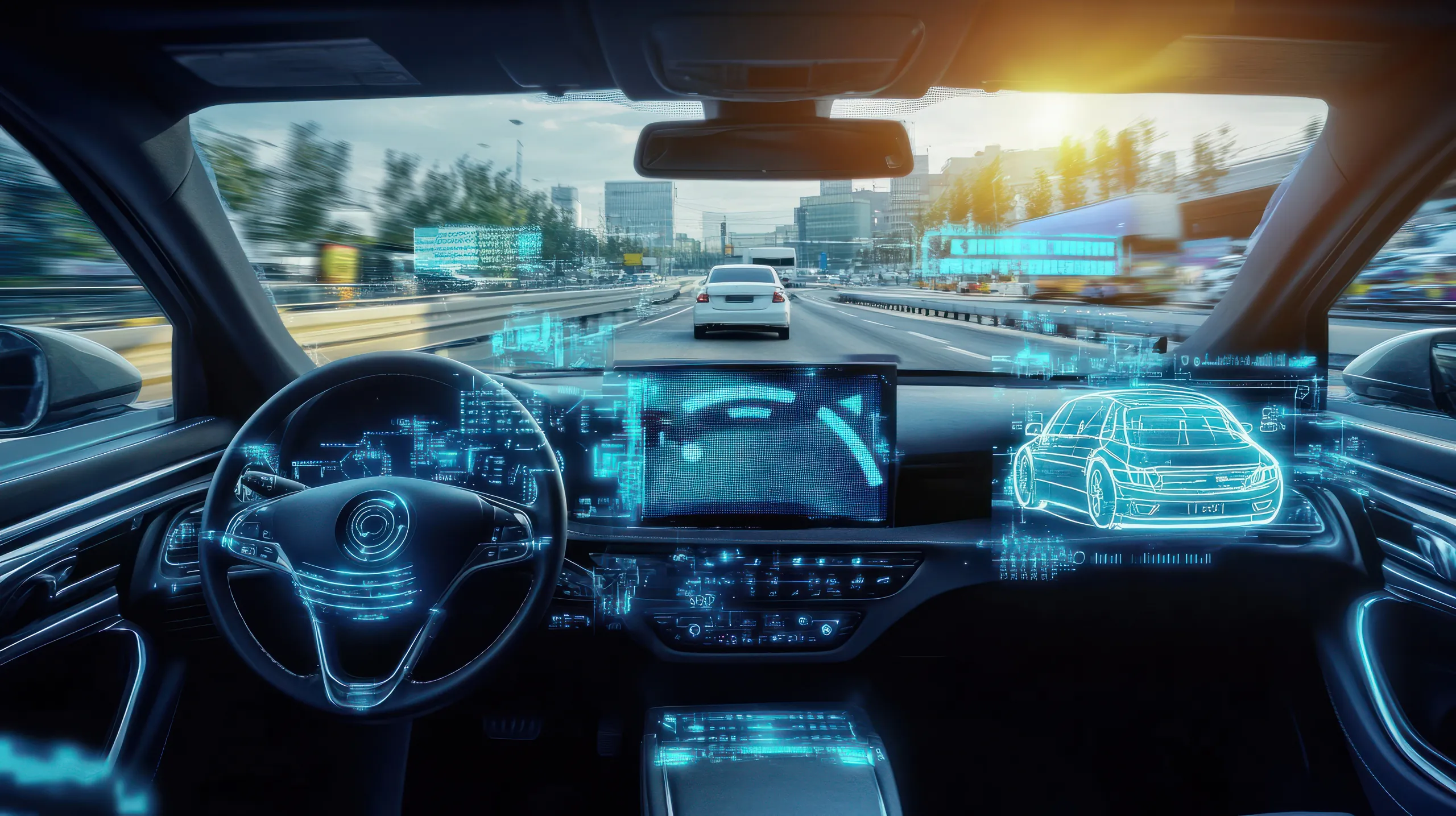
The sensors, the cameras, the lidar, the braking systems and, most critically, the software making split-second decisions are no different legally than airbags, tires or steering columns. They are components of a consumer product being placed into the stream of commerce.
And when that product injures someone, the same doctrines apply.
Need Help With Defective Products?GET A FREE CONSULTATION.
215-774-5162
The Recent Incidents That Spark the Debate
That framework is why recent federal investigations into autonomous vehicles deserve attention from lawyers and families alike.
Waymo, owned by Alphabet, recently reported that one of its driverless vehicles struck a child near an elementary school in Santa Monica, California. The matter is now under review by the National Highway Traffic Safety Administration.
According to agency records, the collision occurred during school drop-off hours in an area crowded with children, a crossing guard and double-parked cars. The child reportedly ran from behind a stopped SUV and was hit by the autonomous vehicle, which was operating without a human safety supervisor.
Waymo has said its system detected the child and braked sharply, reducing speed significantly before impact. Federal investigators are now examining whether the vehicle exercised appropriate caution in a school zone and whether its “intended behavior” around children and other vulnerable road users is adequate.
Around the same time, another Waymo-operated vehicle in Los Angeles struck several parked cars while traveling at a high speed through a residential street. The company has said that incident involved a human operator in manual mode.
Separately, the National Transportation Safety Board has opened an inquiry into reports that Waymo vehicles passed stopped school buses in Austin, Texas, while children were loading and unloading.
None of these investigations presumes fault. But from a product liability perspective, they raise exactly the kinds of questions courts and juries have wrestled with for decades.
In Product Law, the Robot Is the Product
One of the most common misconceptions about self-driving vehicles is that liability will always fall on a human occupant, a remote supervisor or some future regulatory scheme that excuses manufacturers.
That is not how existing law works.
When a company sells or deploys a vehicle that relies on automated driving systems, that technology becomes part of the product’s design. If a braking algorithm is overly aggressive, that is a design issue. If pedestrian-detection software struggles with children emerging from behind parked cars, that is a foreseeable risk scenario. If the system fails to default to extra caution in school zones, that is a problem.
In traditional auto cases, manufacturers can be held responsible for defective designs, manufacturing flaws or inadequate warnings. The same theories apply to autonomous technology:
- Design defect: Was the system engineered in a way that made it dangerous when used as intended.
- Failure to warn: Were users, municipalities or regulators adequately informed of limitations.
- Reasonable alternative design: Could safer programming choices, redundancies or operational restrictions have reduced the risk.
The fact that software is intangible does not insulate it. Courts already analyze embedded code in medical devices, industrial equipment and aircraft systems. Autonomous vehicles are simply the next frontier.
Are Robots “Better” Than Humans
Developers often argue that autonomous systems are statistically safer than human drivers overall. That may ultimately prove true across millions of miles.
But product liability cases are not decided on averages alone.
They are decided on specifics.
What did the system do in this moment. What information did it have. How did it weigh competing risks. And was that response reasonable given the environment.
School zones, residential streets and bus stops are not exotic edge cases. They are predictable, high-risk settings that every road-going vehicle must handle safely. Human drivers are legally required to slow dramatically, anticipate sudden movement and yield to children. If an automated system is marketed for use in those same spaces, it will be held to comparable, and in some cases higher, expectations.
In fact, as automation advances, juries may become less tolerant of mistakes. When a human driver errs, we chalk some of it up to distraction or poor judgment. When a machine errs, the instinctive question is different: Why was it designed in a way that allowed that to occur.
Questions About Defective Products?GET A FREE CONSULTATION.
215-774-5162
Patterns Matter More Than Single Events
Another feature of product litigation is the importance of patterns.
One incident can be an anomaly. Several similar incidents can suggest a systemic problem. Regulators look for clusters. Plaintiffs’ lawyers look for notice. Companies look for data that shows whether a particular risk is being adequately controlled.
That is why regulators pay close attention when multiple events involve the same kinds of environments, such as school buses or residential neighborhoods. It is also why internal testing protocols, post-incident reviews and software updates become central pieces of evidence in court.
Transparency matters too. Voluntary reporting, cooperation with investigators and rapid design changes can mitigate regulatory pressure. Silence or vague explanations often do the opposite.
Innovation and Accountability Can Coexist
None of this means the law is hostile to autonomous vehicles.
Product liability doctrine has accompanied every major automotive safety leap. Airbags injured people before they were refined. Stability control systems took years to become standard. Early cruise control and braking assist features were litigated long before they were made safer.
The legal system does not demand perfection. It demands reasonable safety, thoughtful design and honest communication about limitations.
For autonomous vehicles, that likely means conservative programming around children, cautious driving and braking in low-visibility situations, geo-fencing near schools, robust monitoring of edge cases and constant reassessment as new data comes in.
Trust Will Be Built in Courtrooms as Much as on Roads
Public trust in self-driving cars will not be earned solely through marketing campaigns or impressive statistics. It will be built, in part, through how companies respond when things go wrong.
Do they disclose promptly. Do they improve designs. Do they cooperate with regulators. And when injuries occur, do they accept responsibility where appropriate.
From a product liability standpoint, the question is not whether humans or robots are perfect drivers.
Neither is.
The question is whether the product being placed into everyday traffic is engineered to protect the people around it in the most foreseeable and vulnerable situations imaginable.
Children crossing near schools. Families stepping off curbs. Neighbors backing out of driveways.
Those are the moments that define safety. And those are the moments the law will scrutinize most closely as autonomous vehicles move from experimental to ordinary.
At Fulginiti Law, we will be watching these developments carefully, because the principles at stake are not futuristic at all. They are the same ones that have governed product safety for generations. The technology may be new. The legal duty to design responsibly is not.
NOTABLE RESULTS
Broader products-liability results reported by Fulginiti Law:
$4,000,000 settlement · $3,070,000 settlement
Read more about these results
- $4,000,000 settlement: Defective implant caused joint destruction. Case result source
- $3,070,000 settlement: Defective construction equipment caused a job-site fall. Case result source
Prior results do not guarantee a similar outcome. Each case is different and must be evaluated on its own facts.
WHAT OUR CLIENTS SAY
General feedback about working with Fulginiti Law:
Ken and his team took great care of me when I was in need.
— Rob Roberts
Ken worked tirelessly along with Sarah and staff as they were always available to answer my questions or concerns…
— Bob Donnelly
Professional Recognition
Published Writings by Ken Fulginiti
- When Robo-Taxis Meet School Zones: Why the Waymo Investigation Matters for Products Liability Law — Ken Fulginiti, The Legal Intelligencer, February 5, 2026.
- The One Piece of Evidence Nobody Appreciated — Ken Fulginiti, The Legal Intelligencer (Law.com), June 25, 2026.
Broader personal injury reading by Ken Fulginiti:
- Working to Ensure Juries Can Fully Value the Claims of Injury Victims — Ken Fulginiti, The Legal Intelligencer, October 9, 2025.
- When Justice Is Delayed, Trauma Is Reopened — Ken Fulginiti, The Legal Intelligencer, August 21, 2025.
Related Practice Resources
Ready to Discuss Your Defective Products Case?GET A FREE CONSULTATION.
215-774-5162


Related Fulginiti Law Videos and Social Posts